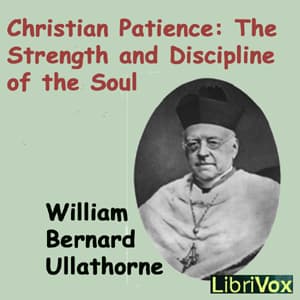
William Bernard Ullathorne
William Bernard Ullathorne was an English Benedictine monk, writer, and influential figure in the Catholic Church during the 19th century. Born in 1806, he was initially drawn to the Anglican faith but converted to Catholicism in 1825, which profoundly shaped his spiritual and literary pursuits. Ullathorne became a prominent advocate for Catholic education and the revival of monastic life in England, serving as the first bishop of Birmingham from 1850 until his retirement in 1888. His ecclesiastical career was marked by a commitment to social justice and education, as he believed in the importance of integrating faith with intellectual development. Ullathorne was also a prolific author, writing extensively on theological and philosophical topics. His notable works include "The End of the Present World and the Mysteries of the Future State," which explores eschatological themes, and "The Life of the Venerable Bede," a biography that highlights the contributions of one of England's early saints. His writings often reflected his deep spiritual insights and were characterized by a blend of scholarly rigor and pastoral concern. Ullathorne's legacy lies in his efforts to bridge the gap between faith and reason, and his contributions to Catholic thought continue to be recognized in contemporary discussions of religion and philosophy.
Books from the author


Link to this page
Add a free, dofollow link to Lex on your blog, forum, syllabus, or reading list.

<a href="https://lex-books.com/author/william-bernard-ullathorne"><img src="https://lex-books.com/badges/read-on-lex.svg" alt="William Bernard Ullathorne on Lex" width="160" height="40"></a>[](https://lex-books.com/author/william-bernard-ullathorne)[url=https://lex-books.com/author/william-bernard-ullathorne][img]https://lex-books.com/badges/read-on-lex.svg[/img][/url]William Bernard Ullathorne on Lex: https://lex-books.com/author/william-bernard-ullathorne