M. C. Bradbrook
1909
52 works on record
Works
Shakespeare The Poet in his World
2005
Shakespeare in his context
1989
Muriel Bradbrook on Shakespeare
1984
Aspects of dramatic form in the English and the Irish Renaissance
1983
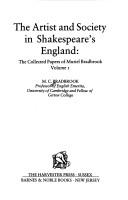
The Artist and society in Shakespeare's England
1982
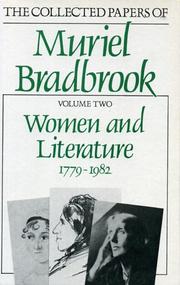
Women and literature, 1779-1982
1982
John Webster, citizen and dramatist
1980
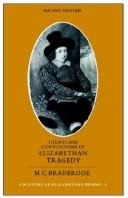
A History of Elizabethan Drama
1979
Shakespeare and Elizabethan Poetry (History of Elizabethan Drama)
1979
Shakespeare
1978
George Chapman
1977
The living monument
1976
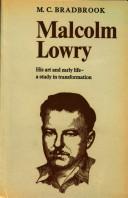
Malcolm Lowry
1975

Malcolm Lowry: his art & early life
1974

Literature in action
1972
Literature in action: studies in continental and Commonwealth society
1972
Shakespeare the craftsman
1969

Ibsen, the Norwegian; a revaluation
1969

English dramatic form in the old drama and the new
1965

English dramatic form
1965
The rise of the common player
1962
Sir Thomas Malory
1958
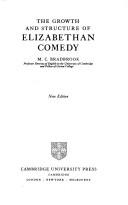
The growth and structure of Elizabethan comedy
1955

Shakespeare and Elizabethan poetry
1951

T.S. Eliot
1950

Joseph Conrad
1941

The school of night
1936

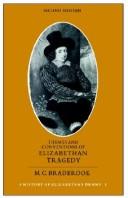
Themes and conventions of Elizabethan tragedy
1935

Elizabethan stage conditions
1932
Helen Kinne

My Cambridge
A lecture on the plays of T. S. Eliot
1985
The function of a complex variable
1981
Vikas
1981
Barbara Bodichon, George Eliot and the limits of feminism
1975
T. S. Eliot: the making of The waste land
1972
Shakespeare and his collaborators
1972
Shakespeare and the structure of Tudor Society
1972
'That infidel place': a short history of Girton College, 1869-1969
1969
'That infidel place'
1969
King Henry IV
1969
The tragic pageant of Timon of Athens
1966
Joseph Conrad: Józef Teodor Konrad Nałe̜cz Korzeniowski
1965
Shakespeare's Primitive Art
1965
Andrew Marvell [by] M.C. Bradbrook and M.G. Lloyd Thomas
1961
Shakespeare and Elizabethan poetry; a study of his earlier work in relation to the poetry of the time
1961
Queens Garland
1953
Ibsen, the Norwegian
1946
Andrew Marvell
1940
Andrew Marvell [by] Muriel Clara Bradbrook and M.G. Lloyd Thomas
1940
T. S. Eliot
The growth and structure of Elizabeth comedy