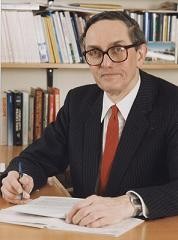
Richard Rose
8 Apr 1933
98 works on record
Biography
Works
Learning from comparative public policy
2004
Elections without order
2002

Ordinary people in public policy
1989

Ministers and ministries
1987

Voters begin to choose
1986

United Kingdom facts
1982
Understanding the United Kingdom
1982
Northern Ireland
1976

The problem of party government
1974

Electoral behavior
1973

Policy-making in Britain
1969
Influencing voters
1967

RUSSIA TRANSFORMED: DEVELOPING POPULAR SUPPORT FOR A NEW REGIME
Russia Transformed

Popular support for an undemocratic regime
The Management of urban change in Britain and Germany

The Welfare state East and West

New trends in British politics

Britain : progress and decline

Elections without choice

The territorial dimension in United Kingdom politics
The Dynamics of public policy
Britain
Presidents and prime ministers

Public employment in Western nations

Politics in England

Challenge to governance
Electoral Participation: A Comparative Analysis
Time matters
2006
Social shocks, social confidence and health
2002
A decade of new Russia barometer surveys
2002
Monitoring governance and economy in transitional societies
2002
The impact of social capital on health
2001
The internet's impact on East Asian governance
2001
What does social capital add to democratic values?
2001
A decade of change but not much progress
2001
Russians under Putin
2001
Russia elects a president
2000
Russia between elections
2000
New Baltic barometer IV
2000
The 1999 Duma vote
2000
New Russia barometer trends since 1992
1999
Democratization backwards
1999
Qualities of incomplete democracies
1998
Getting things done in an anti-modern society
1998
A catalogue of VCIOM surveys, 1989-1996
1997
Baltic trends
1997
Where are the post-communist countries going?
1997
Negative and positive partisanship in post-communist countries
1997
Survey measures of democracy
1997
Boris Yeltsin's changing popular support
1996
Comparing workers in Russian enterprises
1996
The relation of income andconsumer durables in Russia
1996
New democracies barometer IV
1996
Change and stability in the new democracies barometer
1996
Pensioners, gender and poverty in the Baltic States
1995
German responses to regime change
1995
New democracies barometer III
1994
What is the value of fringe benefits in Russia?
1994
New Russia barometer III
1994
Distrust as an obstacle to civil society
1994
Dynamics of democratic regimes
1994
What is the chance for democracy inCentral and Eastern Europe?
1994
Progress across time & catching up across space
1994
Who grows food in Eastern Europe?
1993
Adapting to transformation in Eastern Europe
1993
Is money the measure of welfare in Russia?
1993
What are the economic consequences of PR?
1992
Bringing freedom back in
1991
Tactical versus expressive voting in Britain
1989
What's new in youth employment policy
1989
Who is and is not employed?
1988
Maximizing revenue and maximizing political costs
1985
The state's contribution to the welfare mix
1985
Accountability to electorates and the market
1985
Fiscal constraints and welfare in society
1985
Maximizing revenue and minimizing political costs
1985
The capacity of the President
1984
Inertia or incrementalism?
1984
Opinion polls as feedback mechanisms
1983
The public policy effects of independence
1983
The programme approach to the growth of government
1983
Getting by in three economies
1983
Choice in electoral systems
1982
Policy research and government policy
1982
The political status of higher civil servants in Britain
1981
Incrementalism or instability?
1981
Incumbency in government
1980
Class does not equal party
1980
Towards normality--
1979
The political consequences of economic overload
1977
The future of Scottish politics
1975
Management of urban change in Britain and Germany
1974
Northern Ireland loyalty study - 1968
1973
Persistence and change in western party systems since 1945
1970
Policy-jaking in Britain
1969
RUSSIAN RESPONSES TO TRANSFORMATION: TRENDS IN PUBLIC OPINION SINCE 1992
Fiscal stress in cities