A
Amar Gupta
17 works on record
Biography
Dr. Amar Gupta received his Ph.D. in decision support systems from I.I.T Delhi in 1980. He wrote his doctoral dissertation at MIT (1979-80). Before joining Pace University as Dean of Seidenberg School of Computer Science and Information Systems, Dr. Gupta worked at the University of Arizona (2004-12) and MIT (full-time from 1980 to 2004 and part of the year since 2004). When he was with University of Arizona, he was Thomas R. Brown Endowed Professor of Management and Technology in the Office of the Dean of the Eller College of Management, tenured and Endowed Professor in the field of Entrepreneurship, Professor of Computer Science, and the Founder-Head of the “Nexus of Entrepreneurship and Technology” Initiative. When he was with MIT, he was the founding Co-Director of the Productivity from Information Technology (PROFIT) Initiative, Director of the Research Program on Communications Policy, and Associate Director of MIT’s International Financial Services Research Center.
As an established computer science professor, researcher and innovator, Dr. Gupta has published 12 books and over 150 papers and articles, and pioneered in areas of the concept of 24-Hour-Knowledge Factory (from 2004 onwards), three-faceted approach to diverse Healthcare Applications including Mammography, and IBM PC-based presentation graphics. In addition, is the lead inventor of a broad patent on electronic processing of bank checks. He has mentored over 75 graduate students whose research was supervised by him. Dr. Gupta’s research has been supported by several millions dollars of grants and awards by US government agencies (including DARPA, NSF, the US Air Force, and the US Department of Transportation), and diverse companies including IBM and Honeywell.
Works
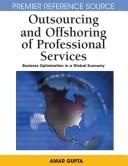
Outsourcing and offshoring of professional services

Multi-microprocessors

Insights into personal computers
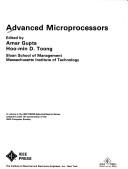
Advanced microprocessors
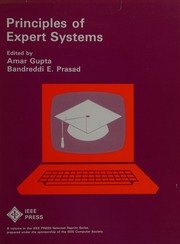
Principles of expert systems

Microcomputer-based expert systems

Advanced microprocessors, II
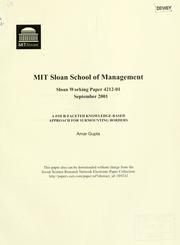
A four-faceted knowledge-based approach for surmounting borders

Automated transfer of information from paper documents to computer-accessible media
Integration of information systems
Integration of information systems
Creating Agile Business Systems with Reusable Knowledge
Creating Agile Business Systems with Reusable Knowledge
Personal Computers
Personal Computers
Knowledge Reuse and Agile Processes
Knowledge Reuse and Agile Processes
Integrating images, applications, and communications networks
Integrating images, applications, and communications networks
Knowledge-based integrated information systems development methodologies plan
Knowledge-based integrated information systems development methodologies plan
Knowledge-based integrated information systems engineering
Knowledge-based integrated information systems engineering
Advanced Microprocessors II
Advanced Microprocessors II