
Sir William Osler
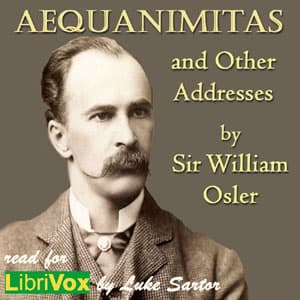
Sir William Osler was a pioneering physician and medical educator, often referred to as the father of modern medicine. Born in Canada, he played a crucial role in establishing the principles of clinical education, emphasizing the importance of bedside teaching and patient-centered care. His tenure at Johns Hopkins Hospital marked a transformative period in medical training, where he introduced the concept of the residency program, shaping the future of medical education worldwide. Osler's influential textbook, 'The Principles and Practice of Medicine,' became a standard reference for generations of physicians and is credited with bridging the gap between theory and practice in medicine. Osler's contributions extended beyond the classroom; he was a prolific writer and a passionate advocate for the humane treatment of patients. His essays and lectures often reflected his belief in the art of medicine, blending scientific rigor with compassion. His legacy endures not only in the institutions and practices he helped establish but also in the Osler Society, which continues to promote his ideals. Osler's vision of a physician as a healer and educator has left an indelible mark on the field of medicine, influencing countless practitioners and shaping the way healthcare is delivered today.
Books from the author
Link to this page
Add a free, dofollow link to Lex on your blog, forum, syllabus, or reading list.

<a href="https://lex-books.com/author/sir-william-osler"><img src="https://lex-books.com/badges/read-on-lex.svg" alt="Sir William Osler on Lex" width="160" height="40"></a>[](https://lex-books.com/author/sir-william-osler)[url=https://lex-books.com/author/sir-william-osler][img]https://lex-books.com/badges/read-on-lex.svg[/img][/url]Sir William Osler on Lex: https://lex-books.com/author/sir-william-osler