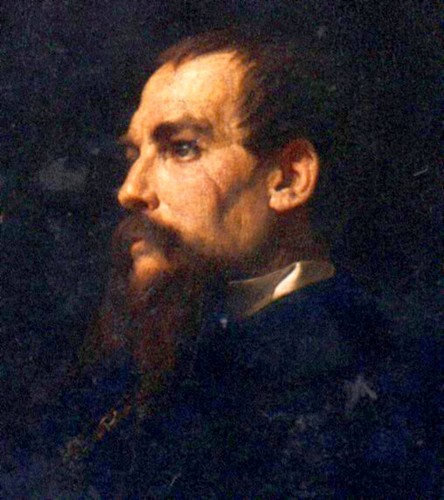
Burton, Richard F.
Richard Francis Burton was a British explorer, geographer, and linguist renowned for his adventurous spirit and extensive travels in the 19th century. Born in 1821, he was educated at Trinity College, Oxford, where he developed a keen interest in languages and cultures. His expeditions took him to various parts of the world, including Africa, the Middle East, and India, where he often immersed himself in local customs and traditions, sometimes adopting local dress and practices to gain acceptance. Burton's most notable work, 'The Lake Regions of Central Equatorial Africa,' published in 1860, documented his expedition to the sources of the White Nile. This comprehensive account not only provided valuable geographical insights but also reflected his observations on the cultures and societies he encountered, showcasing his dual role as an explorer and anthropologist. Burton's legacy is marked by his contributions to exploration and his pioneering spirit in the face of adversity. He was one of the first Europeans to visit and document many regions of Africa, and his writings often challenged the prevailing views of colonialism and imperialism. His work laid the groundwork for future explorations and studies of African geography and ethnography. Despite facing criticism and controversy during his lifetime, particularly for his frank discussions of sexuality and culture, Burton's adventurous life and literary contributions have secured his place in the annals of exploration history. He passed away in 1890, leaving behind a rich legacy of exploration and cultural understanding.
Books from the author

Link to this page
Add a free, dofollow link to Lex on your blog, forum, syllabus, or reading list.

<a href="https://lex-books.com/author/richard-f-burton"><img src="https://lex-books.com/badges/read-on-lex.svg" alt="Burton, Richard F. on Lex" width="160" height="40"></a>[](https://lex-books.com/author/richard-f-burton)[url=https://lex-books.com/author/richard-f-burton][img]https://lex-books.com/badges/read-on-lex.svg[/img][/url]Burton, Richard F. on Lex: https://lex-books.com/author/richard-f-burton