
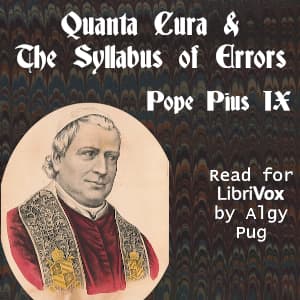
Pope Pius IX
Pope Pius IX, who served as the head of the Catholic Church from 1846 to 1878, was a pivotal figure in the history of the papacy and the broader context of 19th-century Europe. His papacy was marked by significant political and theological challenges, including the rise of nationalism and liberalism, which often clashed with the traditional authority of the Church. Pius IX is perhaps best known for his promulgation of the dogma of the Immaculate Conception in 1854 and for convening the First Vatican Council in 1869, which defined the doctrine of papal infallibility. These actions underscored his commitment to maintaining the Church's authority in a rapidly changing world. Among his notable works, "Quanta Cura" and the accompanying "Syllabus of Errors" issued in 1864, condemned various modern philosophies and ideologies, including rationalism, liberalism, and socialism. This document was a clarion call against the perceived threats to the Church's teachings and authority. Additionally, his "Encyclical Letters" addressed a range of issues, from social justice to the role of the Church in contemporary society, reflecting his deep engagement with the moral and ethical dilemmas of his time. Pius IX's legacy is complex; he is both revered for his staunch defense of Catholic doctrine and critiqued for his resistance to modernity, making him a controversial yet significant figure in the history of the Catholic Church.
Famous Quotes
View all 2 quotes“The civil liberty of every mode of worship, and full power given to all of openly and publicly manifesting their opinions and their ideas conduce more easily to corrupt the morals and minds of the people... The Roman Pontiff cannot and ought not to reconcile himself or agree with, progress, liberalism and modern civilization.””
“Divine revelation is perfect and, therefore, it is not subject to continual and indefinite progress of human reason.””
Books from the author

Link to this page
Add a free, dofollow link to Lex on your blog, forum, syllabus, or reading list.

<a href="https://lex-books.com/author/pope-pius-ix"><img src="https://lex-books.com/badges/read-on-lex.svg" alt="Pope Pius IX on Lex" width="160" height="40"></a>[](https://lex-books.com/author/pope-pius-ix)[url=https://lex-books.com/author/pope-pius-ix][img]https://lex-books.com/badges/read-on-lex.svg[/img][/url]Pope Pius IX on Lex: https://lex-books.com/author/pope-pius-ix