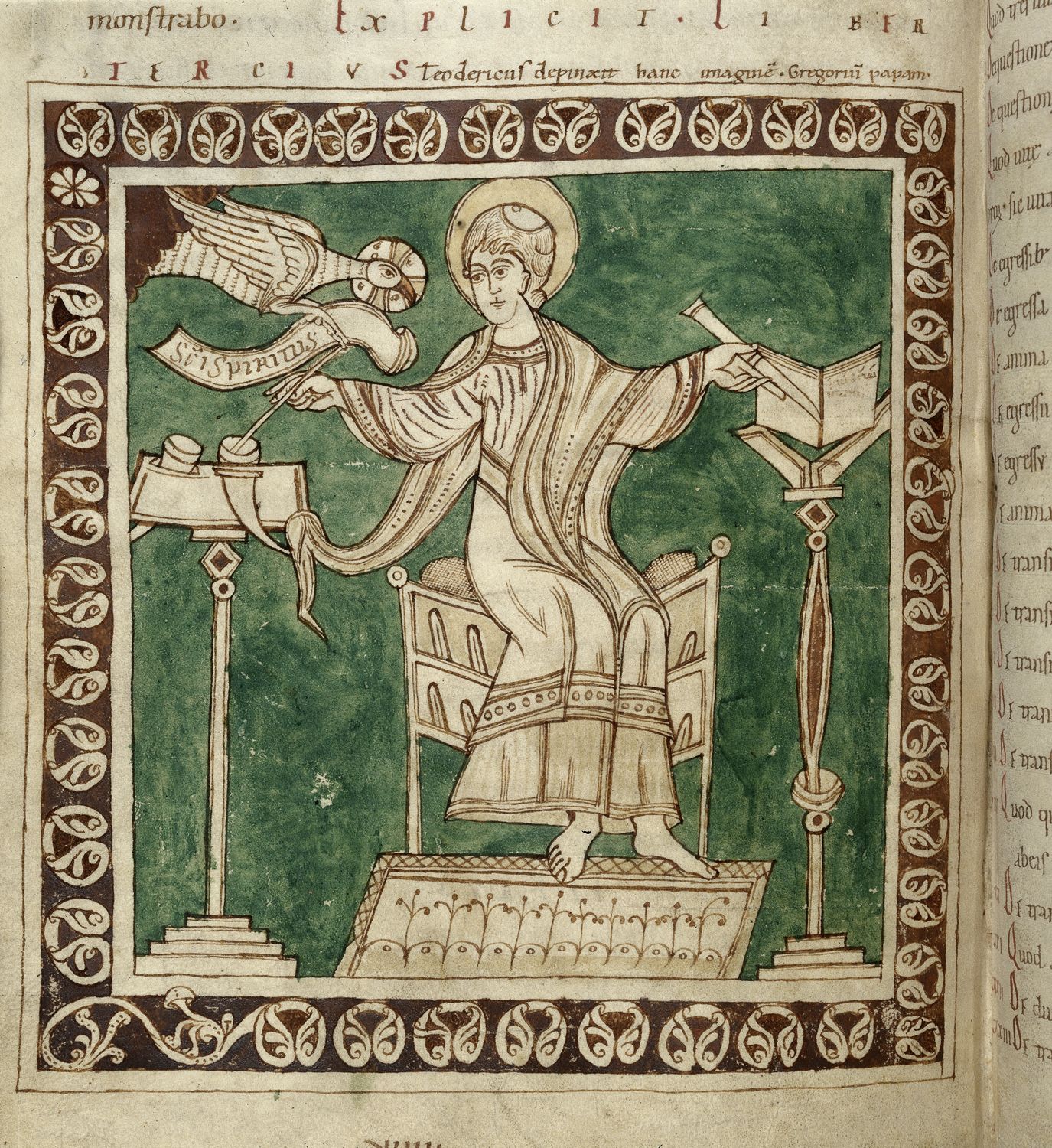
Pope Gregory I
Pope Gregory I, also known as Gregory the Great, was a pivotal figure in the early medieval Church, serving as pope from 590 to 604. Born into a wealthy Roman family, he initially pursued a career in public service before dedicating himself to the monastic life. His tenure as pope was marked by significant reforms in the Church, particularly in the areas of liturgy and pastoral care. He is credited with the Gregorian Chant, a style of plainchant that became a cornerstone of Western liturgical music, and he emphasized the importance of the papacy in guiding the Christian community during a time of political instability in Europe. Gregory's writings, including "Pastoral Care," provided guidance for bishops and clergy, emphasizing the moral and spiritual responsibilities of church leaders. His letters and sermons addressed various theological issues and pastoral concerns, reflecting his deep commitment to the spiritual welfare of his flock. Gregory's influence extended beyond his papacy; he played a crucial role in the spread of Christianity among the Anglo-Saxons and is often regarded as a key figure in the development of medieval Christianity. His legacy endures in the continued use of Gregorian Chant and the ongoing importance of his teachings in the Catholic Church.


Link to this page
Add a free, dofollow link to Lex on your blog, forum, syllabus, or reading list.

<a href="https://lex-books.com/author/pope-gregory-i"><img src="https://lex-books.com/badges/read-on-lex.svg" alt="Pope Gregory I on Lex" width="160" height="40"></a>[](https://lex-books.com/author/pope-gregory-i)[url=https://lex-books.com/author/pope-gregory-i][img]https://lex-books.com/badges/read-on-lex.svg[/img][/url]Pope Gregory I on Lex: https://lex-books.com/author/pope-gregory-i