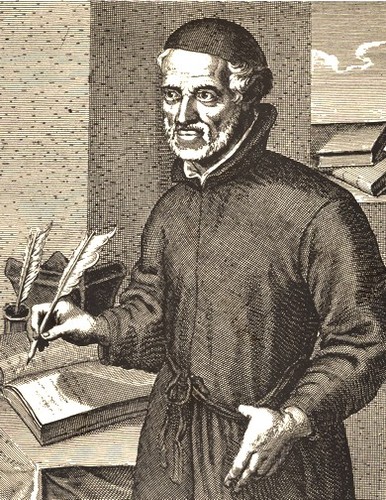
Padre Antonio Vieira
Padre Antonio Vieira was a Portuguese Jesuit priest, renowned for his eloquent sermons and profound writings that explored the intersection of faith, politics, and society in 17th-century Brazil. Born in Lisbon, Vieira moved to Brazil as a child, where he would later become a significant figure in the religious and cultural life of the colony. His most notable works, the 'Sermões' (Sermons), reflect his deep commitment to social justice and his critique of colonialism, as he advocated for the rights of indigenous peoples and the abolition of slavery. His sermons were not only religious discourses but also powerful commentaries on the moral and ethical dilemmas of his time, showcasing his mastery of rhetoric and his ability to engage with complex theological and philosophical ideas. Vieira's legacy extends beyond his sermons; he is considered one of the greatest Portuguese writers and a key figure in the Baroque literary movement. His works have influenced generations of writers and thinkers, and his advocacy for social reform continues to resonate in discussions of ethics and justice. Despite facing opposition from both ecclesiastical and colonial authorities, Vieira's unwavering commitment to his principles and his eloquent expression of faith and reason solidified his place in the literary and historical canon of Brazil and Portugal.
Link to this page
Add a free, dofollow link to Lex on your blog, forum, syllabus, or reading list.

<a href="https://lex-books.com/author/padre-antonio-vieira"><img src="https://lex-books.com/badges/read-on-lex.svg" alt="Padre Antonio Vieira on Lex" width="160" height="40"></a>[](https://lex-books.com/author/padre-antonio-vieira)[url=https://lex-books.com/author/padre-antonio-vieira][img]https://lex-books.com/badges/read-on-lex.svg[/img][/url]Padre Antonio Vieira on Lex: https://lex-books.com/author/padre-antonio-vieira