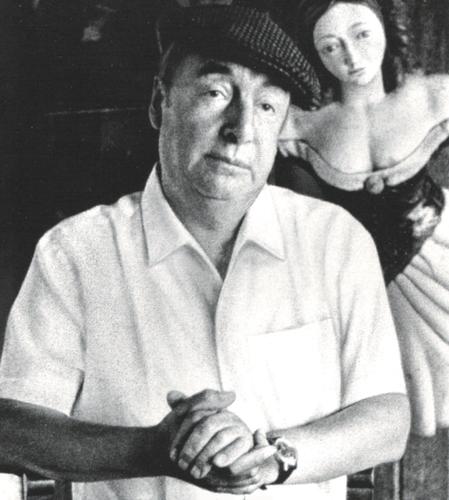
Pablo Neruda
Pablo Neruda was a Chilean poet, diplomat, and politician, celebrated for his passionate and evocative poetry that explored themes of love, nature, and social justice. Born in Parral, Chile, he began writing poetry at a young age and published his first book, 'Twenty Love Poems and a Song of Despair,' which garnered significant acclaim and established him as a leading voice in Latin American literature. His work often reflected his deep commitment to political causes and human rights, which led him to become an influential figure in the Communist Party and a senator in Chile's government. Neruda's literary significance is underscored by his ability to blend personal emotion with broader political and social themes, making his poetry resonate with a wide audience. His later works, such as 'Canto General,' serve as a sweeping epic that celebrates the history and struggles of Latin America. In 1971, he was awarded the Nobel Prize in Literature, recognizing his profound impact on poetry and his role as a voice for the oppressed. Neruda's legacy endures, as his works continue to inspire generations of poets and readers around the world, cementing his status as one of the most important literary figures of the 20th century.
Famous Quotes
View all 20 quotes“I love you without knowing how, or when, or from where. I love you simply, without problems or pride: I love you in this way because I do not know any other way of loving but this, in which there is no I or you, so intimate that your hand upon my chest is my hand, so intimate that when I fall asleep your eyes close.””
“I love you as certain dark things are to be loved, in secret, between the shadow and the soul.””
“Love is so short, forgetting is so long.””
Link to this page
Add a free, dofollow link to Lex on your blog, forum, syllabus, or reading list.

<a href="https://lex-books.com/author/pablo-neruda"><img src="https://lex-books.com/badges/read-on-lex.svg" alt="Pablo Neruda on Lex" width="160" height="40"></a>[](https://lex-books.com/author/pablo-neruda)[url=https://lex-books.com/author/pablo-neruda][img]https://lex-books.com/badges/read-on-lex.svg[/img][/url]Pablo Neruda on Lex: https://lex-books.com/author/pablo-neruda