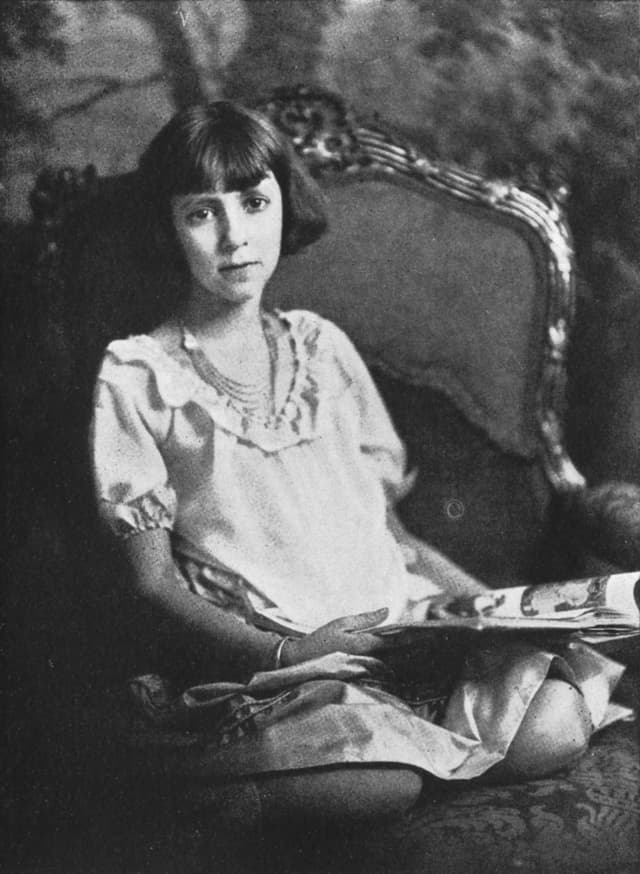
Nathalia Crane
Nathalia Crane was an American poet and novelist who gained prominence as a child prodigy in the early 20th century. Her literary journey began when she published her first book of poetry, The Janitor's Boy, at the age of 12, following the publication of her poems in The New York Sun when she was just 9. This early recognition led to her election into the British Society of Authors, Playwrights, and Composers in 1925, and she quickly became a notable figure in literary circles, often referred to as 'The Brooklyn Bard.' Despite skepticism from some critics, including poet Edwin Markham, who questioned the authenticity of her work, Crane's talent was undeniable, and she continued to write and publish throughout her life. In her late teens, Crane became associated with the Louis Untermeyer poetry circle, which helped to further her career. Her subsequent works, including Lava Lane and Swear by the Night & Other Poems, showcased her evolving voice and depth of insight, challenging the notion of what a child could express through poetry. Crane's literary significance lies not only in her early achievements but also in her ability to transcend the expectations placed upon her as a young writer, ultimately becoming a professor of English at San Diego State University. Her legacy endures as a testament to the power of youthful creativity and the complexities of artistic expression, leaving an indelible mark on American poetry and literature.
Famous Quotes
View all 2 quotes“The rose has told In one simplicity That never life Relinquishes a bloom But to bestow An ancient confidence.”
“You cannot choose your battlefield, God does that for you; But you can plant a standard Where a standard never flew. (From The Colors )”
Audiobooks from the author


Link to this page
Add a free, dofollow link to Lex on your blog, forum, syllabus, or reading list.

<a href="https://lex-books.com/author/nathalia-crane"><img src="https://lex-books.com/badges/read-on-lex.svg" alt="Nathalia Crane on Lex" width="160" height="40"></a>[](https://lex-books.com/author/nathalia-crane)[url=https://lex-books.com/author/nathalia-crane][img]https://lex-books.com/badges/read-on-lex.svg[/img][/url]Nathalia Crane on Lex: https://lex-books.com/author/nathalia-crane