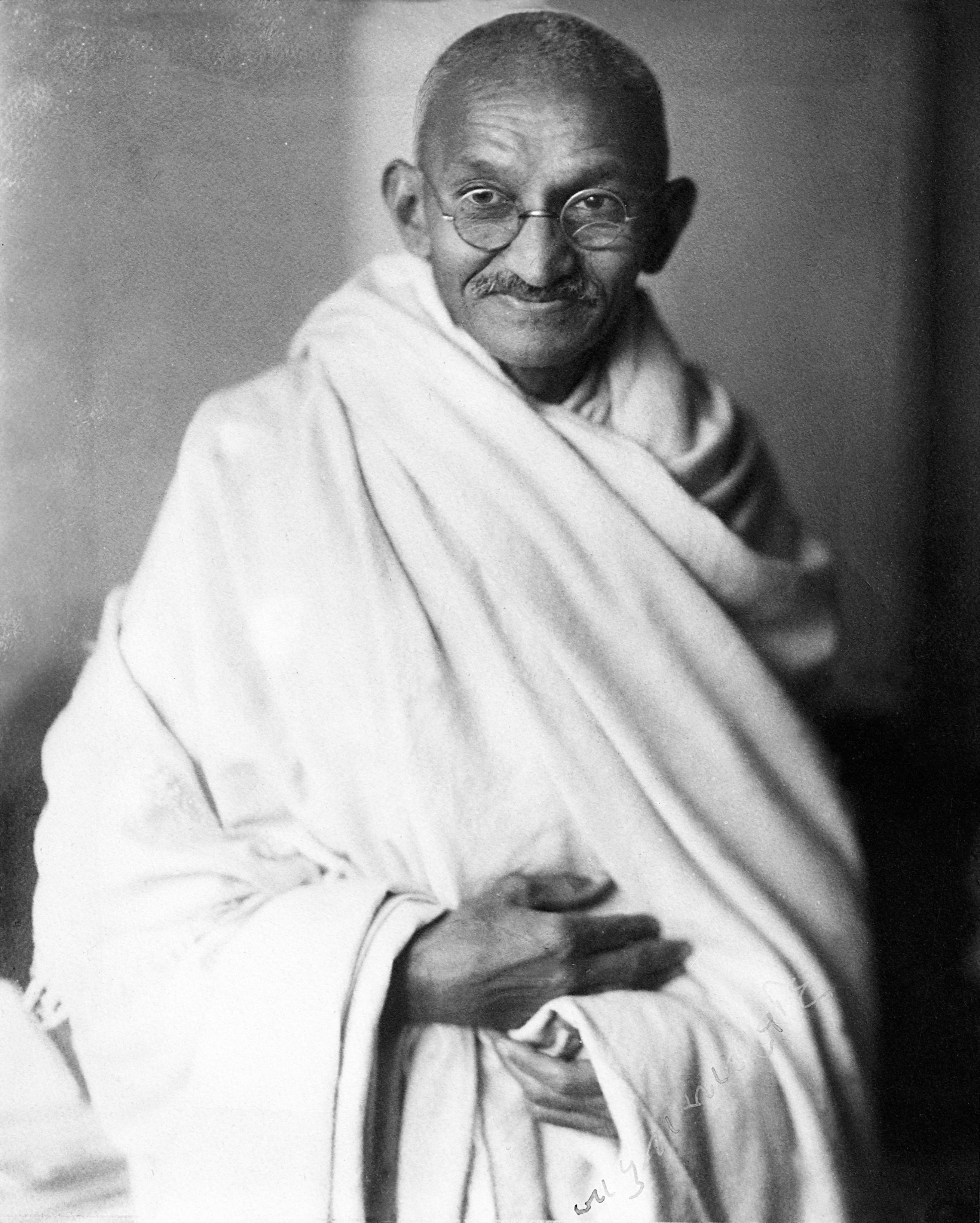
Mohandas Karamchand Gandhi
Mohandas Karamchand Gandhi, known as Mahatma Gandhi, was a pivotal figure in the Indian independence movement against British rule. Born in 1869 in Porbandar, India, he studied law in London before practicing in South Africa, where he developed his philosophy of nonviolent resistance, or Satyagraha. This approach became the cornerstone of his activism, advocating for civil rights and social reforms for the Indian community in South Africa and later in India itself. Gandhi's leadership in the Indian independence movement was marked by significant events such as the Salt March in 1930, which protested British salt taxes, and the Quit India Movement in 1942, which called for an end to British rule. His writings and speeches emphasized the importance of truth, nonviolence, and self-reliance, influencing not only the struggle for Indian independence but also civil rights movements around the world. Gandhi's legacy as a champion of peace and social justice continues to inspire activists globally, making him a symbol of nonviolent resistance and moral leadership in the face of oppression.
Famous Quotes
View all 19 quotes“Whenever you are in doubt, or when the self becomes too much with you, apply the following test. Recall the face of the poorest and the weakest man whom you may have seen, and ask yourself if the step you contemplate is going to be of any use to him. Will he gain anything by it? Will it restore him to a control over his own life and destiny? In other words, will it lead to swaraj for the hungry and spiritually starving millions?””
“Selfishness is blind.””
“If it had not been for the Christians that I have known I might have been a Christian.””





Link to this page
Add a free, dofollow link to Lex on your blog, forum, syllabus, or reading list.

<a href="https://lex-books.com/author/mohandas-karamchand-gandhi"><img src="https://lex-books.com/badges/read-on-lex.svg" alt="Mohandas Karamchand Gandhi on Lex" width="160" height="40"></a>[](https://lex-books.com/author/mohandas-karamchand-gandhi)[url=https://lex-books.com/author/mohandas-karamchand-gandhi][img]https://lex-books.com/badges/read-on-lex.svg[/img][/url]Mohandas Karamchand Gandhi on Lex: https://lex-books.com/author/mohandas-karamchand-gandhi