
Mikhail Yurevich Lermontov
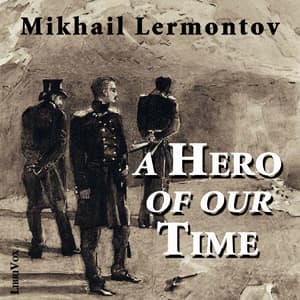
Mikhail Yurevich Lermontov was a prominent Russian poet and novelist, often regarded as one of the leading figures of 19th-century Russian literature. Born into a noble family, Lermontov's early life was marked by tragedy, including the death of his father and the subsequent estrangement from his mother. He was educated in St. Petersburg, where he became involved in the literary circles of the time, developing a reputation for his sharp wit and critical perspective on society. His experiences in the Russian military and his time in exile in the Caucasus greatly influenced his writing, imbuing it with themes of existential angst and the struggle for identity. Lermontov's most notable work, "A Hero of Our Time," is considered one of the first psychological novels in Russian literature, presenting a complex protagonist, Pechorin, whose disillusionment and moral ambiguity reflect the turbulent spirit of his era. The novel's innovative structure, comprising interconnected stories, allows for a multifaceted exploration of character and society. In addition to his prose, Lermontov was a gifted poet, with works that often drew upon the natural beauty of Russia and the themes of love and loss. His lyrical poetry, including pieces inspired by the works of Taras Shevchenko, showcases his deep emotional resonance and mastery of language. Lermontov's literary significance lies not only in his pioneering narrative techniques and psychological depth but also in his ability to articulate the struggles of the Russian soul. His untimely death at a young age in a duel cut short a promising career, but his influence on subsequent generations of writers, including Fyodor Dostoevsky and Anton Chekhov, solidified his legacy as a key figure in Russian literature.
Books from the author


Link to this page
Add a free, dofollow link to Lex on your blog, forum, syllabus, or reading list.

<a href="https://lex-books.com/author/mikhail-yurevich-lermontov"><img src="https://lex-books.com/badges/read-on-lex.svg" alt="Mikhail Yurevich Lermontov on Lex" width="160" height="40"></a>[](https://lex-books.com/author/mikhail-yurevich-lermontov)[url=https://lex-books.com/author/mikhail-yurevich-lermontov][img]https://lex-books.com/badges/read-on-lex.svg[/img][/url]Mikhail Yurevich Lermontov on Lex: https://lex-books.com/author/mikhail-yurevich-lermontov