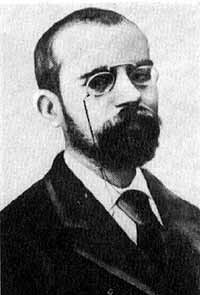
Leopoldo Garcia Alas
Leopoldo García-Alas, known as Clarín, was a prominent Spanish novelist and playwright of the late 19th century, recognized for his keen social commentary and innovative narrative techniques. Born in Asturias, he became a leading figure in the Spanish literary movement known as the Generation of '98, which sought to address the moral and social issues facing Spain following its colonial losses. His most celebrated work, 'La Regenta', is a complex exploration of provincial life in the fictional city of Vetusta, delving into themes of desire, morality, and the constraints of society. This novel is often regarded as one of the first modern Spanish novels, showcasing a rich psychological depth and a critical view of the hypocrisy of the bourgeoisie. In addition to 'La Regenta', which was published in two volumes, García-Alas wrote 'Doña Berta', further demonstrating his skill in character development and social critique. His works are notable for their intricate prose and the use of free indirect discourse, which influenced later generations of writers. García-Alas's legacy lies in his ability to blend realism with psychological insight, making him a pivotal figure in the evolution of modern Spanish literature. His contributions continue to be studied for their innovative narrative style and profound social observations, securing his place in the canon of Spanish literary greats.
Link to this page
Add a free, dofollow link to Lex on your blog, forum, syllabus, or reading list.

<a href="https://lex-books.com/author/leopoldo-garcia-alas"><img src="https://lex-books.com/badges/read-on-lex.svg" alt="Leopoldo Garcia Alas on Lex" width="160" height="40"></a>[](https://lex-books.com/author/leopoldo-garcia-alas)[url=https://lex-books.com/author/leopoldo-garcia-alas][img]https://lex-books.com/badges/read-on-lex.svg[/img][/url]Leopoldo Garcia Alas on Lex: https://lex-books.com/author/leopoldo-garcia-alas