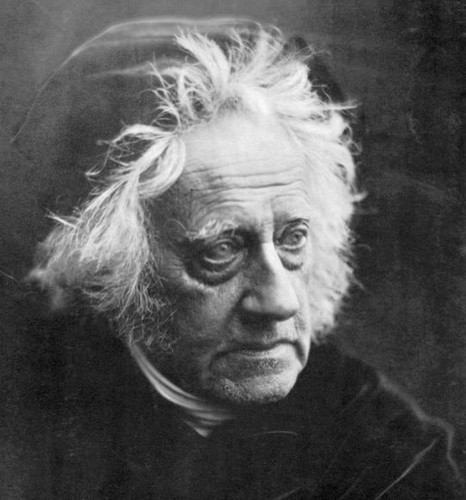
John Frederick William Herschel
John Frederick William Herschel was a prominent English polymath, known for his significant contributions to astronomy, mathematics, and natural philosophy in the 19th century. Born into a family of notable scientists, he was the son of the famed astronomer William Herschel. John Herschel's work in astronomy was groundbreaking; he conducted extensive observations of celestial bodies and developed a systematic approach to the study of the stars and planets. His notable works, such as 'A Treatise on Astronomy' and 'Outlines of Astronomy,' provided foundational knowledge that influenced both contemporary and future astronomers. Through these texts, he sought to make complex astronomical concepts accessible to a broader audience, thereby democratizing scientific knowledge. In addition to his astronomical pursuits, Herschel made significant contributions to natural philosophy, as evidenced by his works 'A Preliminary Discourse on the Study of Natural Philosophy' and 'Preliminary Discourse on the Study of Natural History.' These texts explored the principles of scientific inquiry and the importance of empirical observation, emphasizing the interconnectedness of various scientific disciplines. Herschel's legacy extends beyond his publications; he was instrumental in the development of photography and contributed to the understanding of chemical processes in the natural world. His interdisciplinary approach and commitment to scientific education left a lasting impact on the fields of astronomy and natural science, establishing him as a key figure in the scientific community of his time.
Books from the author

Link to this page
Add a free, dofollow link to Lex on your blog, forum, syllabus, or reading list.

<a href="https://lex-books.com/author/john-frederick-william-herschel"><img src="https://lex-books.com/badges/read-on-lex.svg" alt="John Frederick William Herschel on Lex" width="160" height="40"></a>[](https://lex-books.com/author/john-frederick-william-herschel)[url=https://lex-books.com/author/john-frederick-william-herschel][img]https://lex-books.com/badges/read-on-lex.svg[/img][/url]John Frederick William Herschel on Lex: https://lex-books.com/author/john-frederick-william-herschel