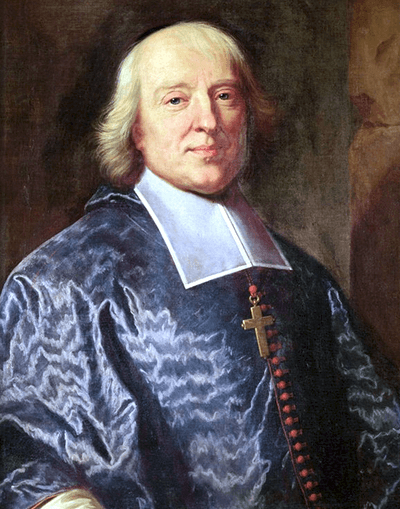
Jacques Bénigne Bossuet
Jacques Bénigne Bossuet was a prominent French bishop and theologian of the 17th century, renowned for his eloquent sermons and writings that significantly influenced the development of French prose. Born in 1627, Bossuet was educated at the prestigious College of Navarre, where he honed his skills in rhetoric and philosophy. His early career was marked by his appointment as a court preacher to Louis XIV, where he gained fame for his powerful oratory and ability to articulate the divine right of kings, a doctrine that justified absolute monarchy in France. His most notable works include 'Politics Drawn from the Very Words of Holy Scripture,' in which he argued for the divine authority of rulers, and 'Sermons,' which showcased his mastery of religious rhetoric and moral philosophy. Bossuet's literary significance lies not only in his theological contributions but also in his role as a precursor to the French Enlightenment. His writings on governance and morality provided a foundation for later thinkers who would challenge the established order. His ability to weave together scripture and political theory made him a key figure in the intellectual landscape of his time. Bossuet's legacy endures through his influence on both religious and secular thought, as well as his contributions to the art of rhetoric, which continue to be studied and admired today.
Famous Quotes
View all 6 quotes“The heart has reasons that reason does not understand.””
“Dieu se rit des hommes qui déplorent les effets dont ils chérissent les causes””
“And just like the madness of a man who, not knowing how to sail, might take to the sea with no one to pilot him, is the madness of a creaturewho enters upon religious life without God's will to guide her.””
Books from the author

Link to this page
Add a free, dofollow link to Lex on your blog, forum, syllabus, or reading list.

<a href="https://lex-books.com/author/jacques-bénigne-bossuet"><img src="https://lex-books.com/badges/read-on-lex.svg" alt="Jacques Bénigne Bossuet on Lex" width="160" height="40"></a>[](https://lex-books.com/author/jacques-bénigne-bossuet)[url=https://lex-books.com/author/jacques-bénigne-bossuet][img]https://lex-books.com/badges/read-on-lex.svg[/img][/url]Jacques Bénigne Bossuet on Lex: https://lex-books.com/author/jacques-bénigne-bossuet