Lex

Browse

All GenresBookshelvesFree BooksFree Audiobooks

Company

About usJobsShare with friendsAffiliates

Legal

Terms of ServicePrivacy Policy

Contact

Supportgeneral@lex-books.com(215) 703-8277

© 2026 LexBooks, Inc. All rights reserved.

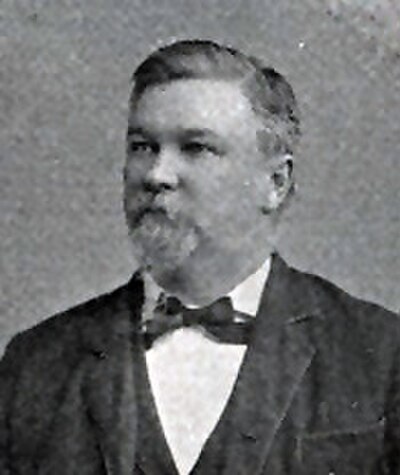
J. B. Wagner

J. B. Wagner

Famous Quotes

View all 11 quotes

“Many discussions of virtue, and many discussions of faith, begin from where we presently are, as muddled, sinful, half-believing human beings, and explore the ways in which virtue (including "faith" in some sense) can help us move forward to become the people God wants and intends us tobecome. In this, as in many areas of theological exploration, I find it helpful to start instead from the far end, from the ultimate goal. I propose that we begin with the picture of what God intends us to be, and has promised that we shall be, and to work back from there to where we are. This is, I suppose, rather like the procedure adopted by some management consultants: to ask where the company ought to be twenty years from now, to imagine that we are already at that moment of presumed or anticipated success, and then to ask the question, How did we get here? What steps did we take on the way?””

The Word Leaps the Gap: Essays on Scripture and Theology in Honor of Richard B. Hays

“Aristotle spoke of the goal or end, the telos, of human moral behavior. We are on a journey toward that point, which he called EObaiµovia. That has normally been translated as "happiness"; but the meaning Aristotle had in mind was not the one that word often suggests in today's Western world (the feeling of contentment or pleasurable excitement) but the more organic one of becoming our full and true selves, discovering in practice the best and highest activity of which humans are capable.””

The Word Leaps the Gap: Essays on Scripture and Theology in Honor of Richard B. Hays

“We can become, in other words, people for whom the romantic or existentialist dream might eventually begin to come at least partially true. But this is not, or not for the most part, something straightforwardly and completely given in baptism and in initial Christian faith.””

The Word Leaps the Gap: Essays on Scripture and Theology in Honor of Richard B. Hays

“Many discussions of virtue, and many discussions of faith, begin from where we presently are, as muddled, sinful, half-believing human beings, and explore the ways in which virtue (including "faith" in some sense) can help us move forward to become the people God wants and intends us tobecome. In this, as in many areas of theological exploration, I find it helpful to start instead from the far end, from the ultimate goal. I propose that we begin with the picture of what God intends us to be, and has promised that we shall be, and to work back from there to where we are. This is, I suppose, rather like the procedure adopted by some management consultants: to ask where the company ought to be twenty years from now, to imagine that we are already at that moment of presumed or anticipated success, and then to ask the question, How did we get here? What steps did we take on the way?””

The Word Leaps the Gap: Essays on Scripture and Theology in Honor of Richard B. Hays

“Aristotle spoke of the goal or end, the telos, of human moral behavior. We are on a journey toward that point, which he called EObaiµovia. That has normally been translated as "happiness"; but the meaning Aristotle had in mind was not the one that word often suggests in today's Western world (the feeling of contentment or pleasurable excitement) but the more organic one of becoming our full and true selves, discovering in practice the best and highest activity of which humans are capable.””

The Word Leaps the Gap: Essays on Scripture and Theology in Honor of Richard B. Hays

“We can become, in other words, people for whom the romantic or existentialist dream might eventually begin to come at least partially true. But this is not, or not for the most part, something straightforwardly and completely given in baptism and in initial Christian faith.””

The Word Leaps the Gap: Essays on Scripture and Theology in Honor of Richard B. Hays

Books from the author

right arrow
Seasoning of Wood

More authors like this

right arrow
Allen Hazen
1869-1930
Roger B. Whitman
1875-1942
C. J. Blanchard
1863-1945
Burr Bassell
1858-1905
E. S. Bellasis
1855-1945
Cornelis Lely
1854-1929
David,Pollock
1932
A. Hildebrandt
1870-1949
Edward Mahon Wev
1870-1910
A. Frederick Collins
1869-1952
Archibald Williams
Archibald Williams
1871-1934
E. van Konijnenburg
1869-1956
Edward Godfrey
1871
E. E. Fournier d'Albe
1868-1933
Edwin J. Prindle
1868-1942
Henry N. Ogden
Henry N. Ogden
1868