
Isaac of Nineveh
Isaac of Nineveh, also known as Isaac the Syrian, was a 7th-century Christian monk and theologian whose writings have had a profound impact on Christian mysticism and spirituality. Born in the region of Nineveh, he became a prominent figure in the monastic community, known for his ascetic lifestyle and deep contemplative practices. His works, particularly the 'Ascetical Homilies,' emphasize the importance of inner spiritual life, love, and compassion, and they reflect a unique blend of Eastern Christian thought and mystical theology. Isaac's approach to spirituality was characterized by a focus on the heart and the transformative power of divine love, which resonated deeply within the monastic tradition and beyond. His legacy endures through his influence on later mystics and theologians, particularly in the Eastern Orthodox Church, where he is venerated as a saint. His writings have been translated into various languages and continue to inspire spiritual seekers and scholars alike. Isaac of Nineveh's emphasis on the experiential aspect of faith and the significance of personal transformation has made him a pivotal figure in the history of Christian spirituality, marking him as one of the early voices in the development of mystical theology.
Famous Quotes
View all 5 quotes“There is love like a small lamp, which goes out when the oil is consumed; or like a stream which dries up when it doesn't rain. But there is a love that is like a mighty spring gushing up out of the earth; it keeps flowing forever, and is inexhaustible.””
“Humility collects the soul into a single point by the power of silence. A truly humble man has no desire to be known or admired by others, but wishes to plunge from himself into himself, to become nothing, as if he had never been born. When he is completely hidden to himself in himself, he is completely with God””
“Dispassion doesn't mean to no longer feel the passions, but to no longer accept them.””
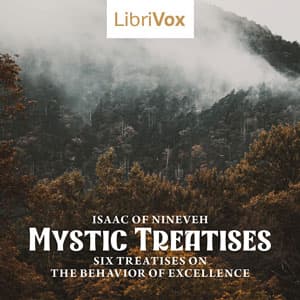
Audiobooks from the author

Link to this page
Add a free, dofollow link to Lex on your blog, forum, syllabus, or reading list.

<a href="https://lex-books.com/author/isaac-of-nineveh"><img src="https://lex-books.com/badges/read-on-lex.svg" alt="Isaac of Nineveh on Lex" width="160" height="40"></a>[](https://lex-books.com/author/isaac-of-nineveh)[url=https://lex-books.com/author/isaac-of-nineveh][img]https://lex-books.com/badges/read-on-lex.svg[/img][/url]Isaac of Nineveh on Lex: https://lex-books.com/author/isaac-of-nineveh