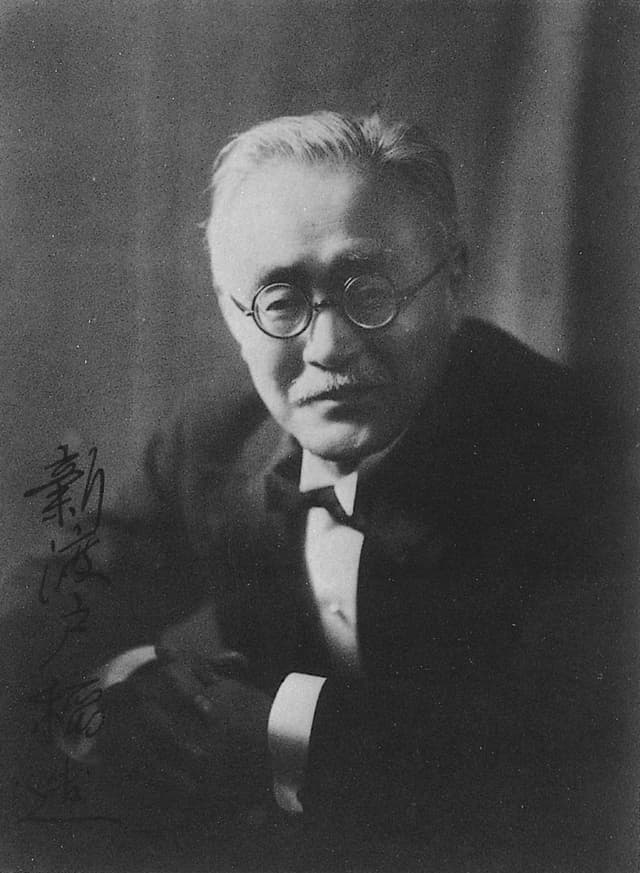
Inazō Nitobe
Inazō Nitobe was a prominent Japanese scholar, educator, and diplomat, best known for his efforts to bridge Eastern and Western cultures. Born in 1862 in what is now Ibaraki Prefecture, he was educated in both Japan and the United States, earning a degree from Johns Hopkins University. Nitobe's most notable work, 'Bushido: The Soul of Japan,' published in 1900, introduced the concept of the samurai code to Western audiences, emphasizing the moral and ethical principles that guided the samurai's way of life. This work not only contributed to the understanding of Japanese culture but also influenced perceptions of Japan in the West during a time of significant cultural exchange and modernization. Throughout his career, Nitobe held various academic and diplomatic positions, including serving as the first Japanese man to be appointed as a professor at a Western university. He was also involved in international diplomacy, representing Japan at the League of Nations. His writings often explored themes of ethics, education, and cultural identity, making him a key figure in the intellectual discourse of his time. Nitobe's legacy endures through his contributions to cultural understanding and his role in promoting a dialogue between Japan and the West, making him a significant figure in both Japanese literature and international relations.
Books from the author

Link to this page
Add a free, dofollow link to Lex on your blog, forum, syllabus, or reading list.

<a href="https://lex-books.com/author/inaz-nitobe"><img src="https://lex-books.com/badges/read-on-lex.svg" alt="Inazō Nitobe on Lex" width="160" height="40"></a>[](https://lex-books.com/author/inaz-nitobe)[url=https://lex-books.com/author/inaz-nitobe][img]https://lex-books.com/badges/read-on-lex.svg[/img][/url]Inazō Nitobe on Lex: https://lex-books.com/author/inaz-nitobe