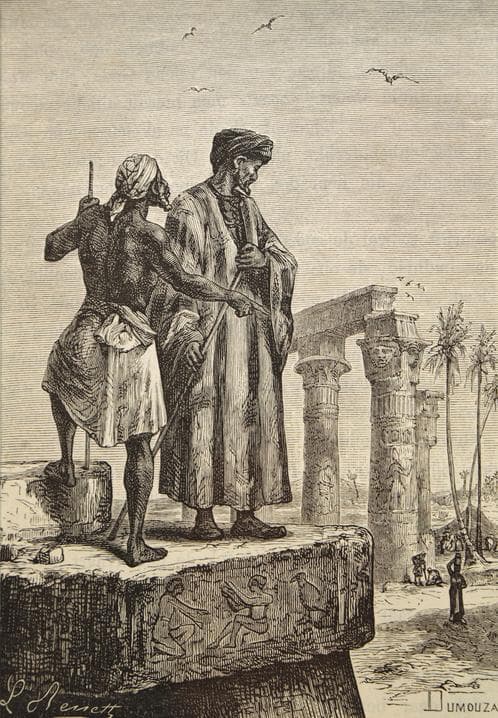
Ibn Battuta
Ibn Battuta was a Moroccan explorer and scholar, renowned for his extensive travels across the Islamic world and beyond during the 14th century. Born in Tangier, he embarked on a journey at the age of 21 that would last nearly three decades, covering over 75,000 miles across Africa, the Middle East, India, and Southeast Asia. His travels were motivated by a desire to complete the Hajj pilgrimage to Mecca, but they evolved into a quest for knowledge and adventure, leading him to visit places such as the courts of the Sultan of Delhi and the Mali Empire. His observations and experiences were meticulously documented in his travelogue, the 'Rihla' (The Journey), which provides invaluable insights into the cultures, societies, and economies of the regions he explored. Ibn Battuta's significance lies not only in the breadth of his travels but also in his role as a cultural ambassador, bridging diverse worlds through his writings. His accounts reflect the interconnectedness of the medieval Islamic world and offer a unique perspective on the customs and practices of various peoples. The 'Rihla' is considered one of the greatest travel narratives in history, influencing both contemporary and later explorers. Ibn Battuta's legacy endures as one of the most significant figures in the history of exploration, showcasing the spirit of curiosity and the pursuit of knowledge that transcends borders and time.
Books from the author
Link to this page
Add a free, dofollow link to Lex on your blog, forum, syllabus, or reading list.

<a href="https://lex-books.com/author/ibn-battuta"><img src="https://lex-books.com/badges/read-on-lex.svg" alt="Ibn Battuta on Lex" width="160" height="40"></a>[](https://lex-books.com/author/ibn-battuta)[url=https://lex-books.com/author/ibn-battuta][img]https://lex-books.com/badges/read-on-lex.svg[/img][/url]Ibn Battuta on Lex: https://lex-books.com/author/ibn-battuta