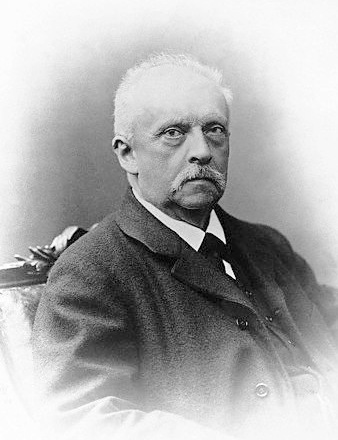
Hermann von Helmholtz
Hermann von Helmholtz was a prominent German physician and physicist whose work bridged the gap between the sciences and philosophy in the 19th century. Born into a family of modest means, he initially pursued a career in medicine, earning his medical degree in 1821. However, his interests soon expanded into the realms of physics and physiology, leading him to explore the principles of energy conservation and the nature of perception. His groundbreaking theories laid the foundation for modern fields such as thermodynamics and sensory physiology. Helmholtz's notable works, including 'Popular Lectures on Scientific Subjects,' showcased his ability to communicate complex scientific ideas to a broader audience, making significant contributions to public understanding of science. His lectures not only reflected his deep understanding of the natural world but also emphasized the importance of empirical evidence and experimentation. Helmholtz's legacy endures through his influence on subsequent generations of scientists and thinkers, as he helped to shape the scientific discourse of his time and beyond, advocating for a rigorous, evidence-based approach to understanding the universe.
Books from the author
Link to this page
Add a free, dofollow link to Lex on your blog, forum, syllabus, or reading list.

<a href="https://lex-books.com/author/hermann-von-helmholtz"><img src="https://lex-books.com/badges/read-on-lex.svg" alt="Hermann von Helmholtz on Lex" width="160" height="40"></a>[](https://lex-books.com/author/hermann-von-helmholtz)[url=https://lex-books.com/author/hermann-von-helmholtz][img]https://lex-books.com/badges/read-on-lex.svg[/img][/url]Hermann von Helmholtz on Lex: https://lex-books.com/author/hermann-von-helmholtz