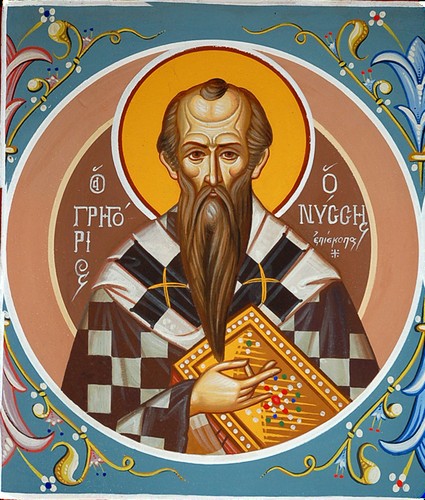
Gregory of Nyssa
Gregory of Nyssa was a prominent Christian bishop and theologian in the 4th century, known for his influential role in the development of early Christian doctrine. As a key figure in the Cappadocian Fathers, he contributed significantly to the formulation of the Nicene Creed and the understanding of the Trinity. His works often addressed theological issues of his time, emphasizing the importance of divine grace and the transformative power of faith. Among his notable writings are 'On Virginity,' which explores the spiritual significance of celibacy, and 'Funeral Oration on Meletius,' a poignant tribute that reflects his pastoral sensitivity and theological depth. Additionally, 'Life of Saint Macrina' serves as both a biographical account of his sister and a meditation on the virtues of ascetic life, showcasing his commitment to monastic ideals. Gregory's theological insights and literary contributions have left a lasting legacy in Christian thought, influencing later theologians and scholars. His emphasis on the mystical aspects of faith and the pursuit of a deeper understanding of God continues to resonate in contemporary theological discussions. Through his writings, Gregory of Nyssa not only shaped the theological landscape of his time but also provided a foundation for future generations to explore the complexities of Christian spirituality and doctrine.

Link to this page
Add a free, dofollow link to Lex on your blog, forum, syllabus, or reading list.

<a href="https://lex-books.com/author/gregory-of-nyssa"><img src="https://lex-books.com/badges/read-on-lex.svg" alt="Gregory of Nyssa on Lex" width="160" height="40"></a>[](https://lex-books.com/author/gregory-of-nyssa)[url=https://lex-books.com/author/gregory-of-nyssa][img]https://lex-books.com/badges/read-on-lex.svg[/img][/url]Gregory of Nyssa on Lex: https://lex-books.com/author/gregory-of-nyssa