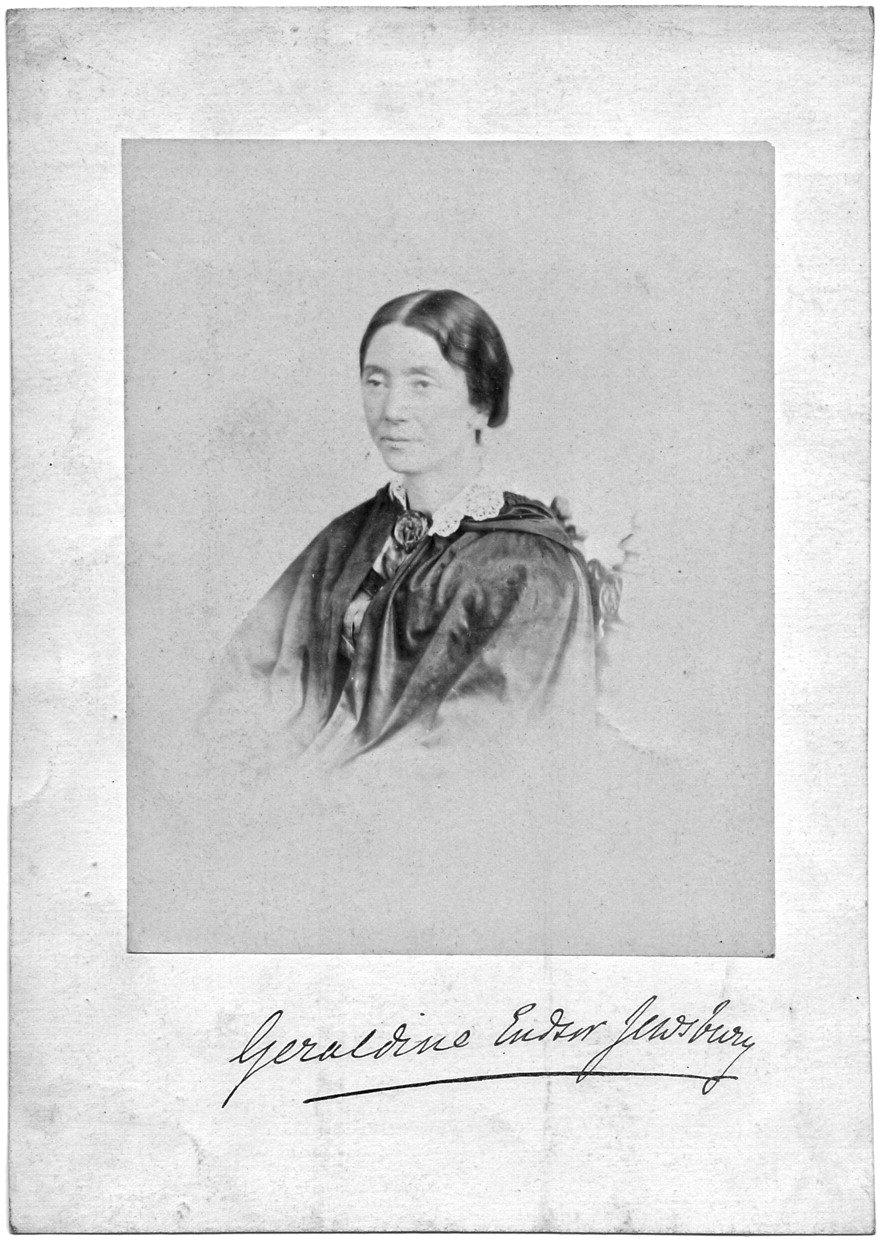
Geraldine Jewsbury
Geraldine Jewsbury was a notable English novelist and literary figure of the 19th century, recognized for her contributions to the development of the novel and her engagement with contemporary social issues. Born into a family of intellectuals, she was well-educated and became acquainted with prominent literary figures of her time, including Charles Dickens, who praised her work. Jewsbury's novels, such as 'The Half-Sisters' and 'The History of Lady Betty Stair', often explored themes of gender, morality, and the complexities of human relationships, reflecting her keen observations of society and the struggles of women in a patriarchal world. Jewsbury's writing is significant not only for its narrative depth but also for its early feminist perspectives, making her a precursor to later feminist literature. Her ability to weave intricate character studies with social commentary set her apart in a literary landscape dominated by male authors. Although her works did not achieve the lasting fame of some of her contemporaries, Jewsbury's influence can be seen in the writings of later authors who similarly tackled issues of identity and social justice. Her legacy endures as a testament to the voices of women writers who challenged the norms of their time.
Famous Quotes
View all 18 quotes“God sent you to me at my worst need," replied Bianca, whose heart bounded at the refined and gentle tone of kindness of her unknown sister. We are unable to say whether it was the force du sang which influenced them, but certainly those two women felt drawn to each other more strongly than actual circumstances could explain.””
“In her hours of sorrow she had often wished that she might lie down and die; and, on the occasion of an epidemic, which carried off a great number of persons, she had looked with a species of envy on the funerals constantly passing the streets.””
“If we would only condescend, when we are dealing with reasonably conscientious people, to believe what they tell us, we should generally arrive nearer the truth than by asserting our claim to shrewdness and cleverness by drawing our own inferences.””
Audiobooks from the author


Link to this page
Add a free, dofollow link to Lex on your blog, forum, syllabus, or reading list.

<a href="https://lex-books.com/author/geraldine-jewsbury"><img src="https://lex-books.com/badges/read-on-lex.svg" alt="Geraldine Jewsbury on Lex" width="160" height="40"></a>[](https://lex-books.com/author/geraldine-jewsbury)[url=https://lex-books.com/author/geraldine-jewsbury][img]https://lex-books.com/badges/read-on-lex.svg[/img][/url]Geraldine Jewsbury on Lex: https://lex-books.com/author/geraldine-jewsbury