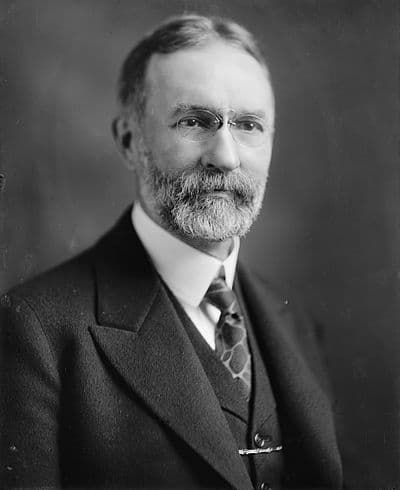
George Sutherland
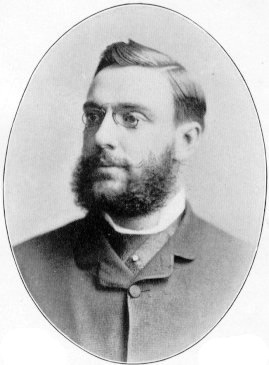
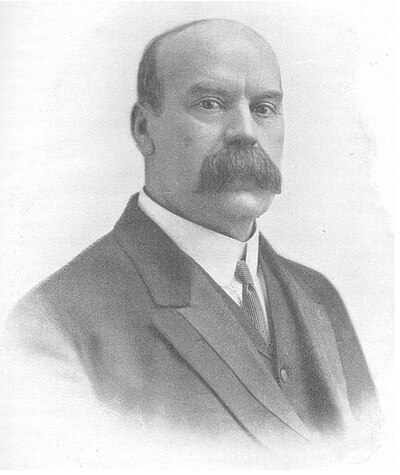
George Sutherland was a British-born American jurist and politician who made significant contributions to the legal landscape of the United States in the early 20th century. Born in Buckinghamshire, England, he immigrated with his family to the Utah Territory in the 1860s. After studying law at the University of Michigan, Sutherland established a legal practice in Provo, Utah, and quickly entered politics, serving in the Utah State Senate before being elected to the United States House of Representatives in 1900. He later became a U.S. Senator in 1905, where he was known for supporting progressive policies while generally aligning with the conservative wing of the Republican Party. Sutherland's most notable legacy lies in his tenure as an associate justice of the U.S. Supreme Court from 1922 to 1938. As a member of the influential group known as the 'Four Horsemen,' he often voted to strike down New Deal legislation, reflecting his conservative judicial philosophy. He authored key opinions in landmark cases such as Village of Euclid v. Ambler Realty Co. and Powell v. Alabama, which helped shape the interpretation of constitutional law during a transformative period in American history. Sutherland's judicial career left a lasting impact on the Court and the broader legal framework of the nation, marking him as a significant figure in the evolution of American jurisprudence.
Famous Quotes
View all 1 quotes“One who does a thing in order to avoid a monetary penalty does not agree; he yields to compulsion precisely the same as though he did so to avoid a term in jail." [Justice George Sutherland, in the majority opinion for the Carter Coal case]”
Books from the author






Link to this page
Add a free, dofollow link to Lex on your blog, forum, syllabus, or reading list.

<a href="https://lex-books.com/author/george-sutherland"><img src="https://lex-books.com/badges/read-on-lex.svg" alt="George Sutherland on Lex" width="160" height="40"></a>[](https://lex-books.com/author/george-sutherland)[url=https://lex-books.com/author/george-sutherland][img]https://lex-books.com/badges/read-on-lex.svg[/img][/url]George Sutherland on Lex: https://lex-books.com/author/george-sutherland