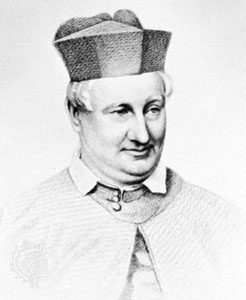
Frederick William Faber
Frederick William Faber was an English theologian and hymn writer, known for his significant contributions to religious literature in the 19th century. Born into a family of dissenters, Faber initially pursued a career in the Anglican Church but later converted to Catholicism, which profoundly influenced his writing and theological outlook. His works often reflected a deep spirituality and a desire to bridge the gap between faith and reason, making him a key figure in the Oxford Movement, which sought to revive Catholic traditions within the Church of England. Among his most notable works are the hymns "Faith of Our Fathers" and "There’s a Wideness in God’s Mercy," which have endured in Christian worship. Faber's lyrical style and theological depth helped to popularize hymnody in the Victorian era, and his writings continue to be celebrated for their emotional resonance and theological insight. His legacy lies in his ability to articulate a vision of faith that was both intellectually rigorous and deeply heartfelt, influencing generations of Christians and hymn writers to come.
Famous Quotes
View all 16 quotes“There are souls in this world who have the gift of finding joy everywhere, and leaving it behind them when they go.””
“Kind thoughts are rarer than either kind words or deeds. They imply a great deal of thinking about others. This in itself is rare. But they also imply a great deal of thinking about others without the thoughts being criticisms. This is rarer still.””
“A spiritual life, without a very large allowance of disquietude in it, is no spiritual life at all. It is but a flattering superstition of self-love.””
Books from the author


Link to this page
Add a free, dofollow link to Lex on your blog, forum, syllabus, or reading list.

<a href="https://lex-books.com/author/frederick-william-faber"><img src="https://lex-books.com/badges/read-on-lex.svg" alt="Frederick William Faber on Lex" width="160" height="40"></a>[](https://lex-books.com/author/frederick-william-faber)[url=https://lex-books.com/author/frederick-william-faber][img]https://lex-books.com/badges/read-on-lex.svg[/img][/url]Frederick William Faber on Lex: https://lex-books.com/author/frederick-william-faber