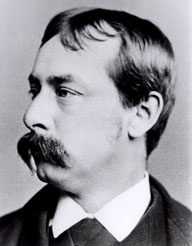
Francis P. Church
Francis P. Church was an American newspaper editor and writer, best remembered for his poignant editorial response to a young girl's letter in 1897. Church served as the editor of the New York Sun, where he penned the famous piece "Yes, Virginia, there is a Santa Claus." This editorial, which affirmed the existence of Santa Claus in a world of skepticism, became a defining moment in American holiday literature and has been cherished by generations. Beyond this iconic work, Church contributed to the fields of journalism and literature with his thoughtful commentary on various social issues of his time. Church's legacy lies not only in his singular editorial but also in his ability to capture the innocence of childhood and the spirit of belief. His words have transcended time, resonating with readers who find comfort in the magic of childhood wonder. The impact of his writing is evident in the continued tradition of sharing his editorial during the holiday season, making him a lasting figure in American cultural history.
Famous Quotes
View all 5 quotes“Not believe in Santa Claus! You might as well not believe in fairies!””
“If it’s 11:00 p.m. and your ten-year-old asks for a latte because he’s tired, you need to tell him to go to sleep. Sleep is the right solution for his fatigue. Too often we have given people what they ask for rather than what they need. There are times when the most loving thing we can do is teach people that joy will come only when they stop screaming for attention and save their voices for the throne.””
“For some [Papists] (gymnē tē kephalē, without wish of concealment) altogether deny the authenticity (authentian) of Scripture in itself without the testimony of the church and think it worthy of no more belief (I shudder to relate) than the Koran, Titus Livy or the fables of Aesop. In a former age those who undertook to dispute with our men concerning the authority of Scripture belched forth these blasphemies. Such are the impious words of Hosius against Brentius ('Confutatio Prolegomenon Brentii,' in Opera [1583], 1:530). He asserts that it can be said in a pious sense that 'the Scriptures have only as much force as the fables of Aesop, if destitute of the authority of the church.' Eck says that 'the Scriptures are not authentic, except by authority of the church' (Enchirdion of Commonplaces 1 [trans. F.L. Battles, 1979], p. 13, 'On the Church and her Authority'). Baile says that 'without the authority of the church we should no more believe Matthew than Titus Livy' (cf. Andre Rivet, Sommaire de toutes les controverses touchant la religion [1615], p. 217). Andradius says, 'There is nothing of divinity in the books in which the sacred mysteries are written and that there cannot be found in them anything to bind us to religion and to believe what they contain; but that the power and dignity of the church are so great as that no one without the greatest impiety can resist it' (Defensio tridentinae fidei catholicae 3+ [1580]). Stapleton says, 'The church must be considered in such a light, as that we ought not to believe the testimony in any other way than the apostles believed the testimony of Christ, and that God is not to be believed except on account of the church' (adversus Whittak., lib. i, c. 7+ [1620]).””
Audiobooks from the author

Link to this page
Add a free, dofollow link to Lex on your blog, forum, syllabus, or reading list.

<a href="https://lex-books.com/author/francis-p-church"><img src="https://lex-books.com/badges/read-on-lex.svg" alt="Francis P. Church on Lex" width="160" height="40"></a>[](https://lex-books.com/author/francis-p-church)[url=https://lex-books.com/author/francis-p-church][img]https://lex-books.com/badges/read-on-lex.svg[/img][/url]Francis P. Church on Lex: https://lex-books.com/author/francis-p-church