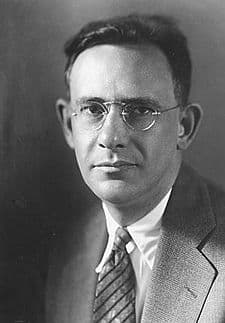
Edward Sapir
Edward Sapir was a pioneering American anthropologist and linguist, recognized as a foundational figure in the development of linguistics in the United States. Born in German Pomerania and later emigrating to the U.S. as a child, he studied Germanic linguistics at Columbia University under the influential Franz Boas. His academic journey led him to California, where he collaborated with Alfred Kroeber to document indigenous languages, significantly contributing to the understanding of Native American linguistics. Over his career, Sapir held positions at various prestigious institutions, including the University of Chicago and Yale, where he shaped the next generation of linguists and anthropologists, including notable figures like Mary Haas and Morris Swadesh. Sapir's work explored the intricate relationship between language and culture, positing that linguistic differences reflect and influence cultural worldviews. This idea later evolved into the Sapir-Whorf hypothesis, articulated by his student Benjamin Lee Whorf, which emphasized the role of language in shaping thought. Additionally, Sapir was an early advocate for integrating psychology into anthropology, arguing that individual personality dynamics are crucial for understanding cultural and societal development. His contributions not only advanced the field of linguistics but also laid the groundwork for interdisciplinary approaches in anthropology, solidifying his legacy as a transformative figure in the social sciences.
Famous Quotes
View all 3 quotes“Language is the most massive and inclusive art we know, a mountainous and anonymous work of unconscious generations.”
“What fetters the mind and benumbs the spirit is ever the dogged acceptance of absolutes.”
“The worlds in which different societies live are distinct worlds, not merely the same world with different labels attached ... We see and hear and otherwise experience very largely as we do because the language habits of our community predispose certain choices of interpretation.”
Books from the author


Link to this page
Add a free, dofollow link to Lex on your blog, forum, syllabus, or reading list.

<a href="https://lex-books.com/author/edward-sapir"><img src="https://lex-books.com/badges/read-on-lex.svg" alt="Edward Sapir on Lex" width="160" height="40"></a>[](https://lex-books.com/author/edward-sapir)[url=https://lex-books.com/author/edward-sapir][img]https://lex-books.com/badges/read-on-lex.svg[/img][/url]Edward Sapir on Lex: https://lex-books.com/author/edward-sapir