
Dmitry Merezhkovsky
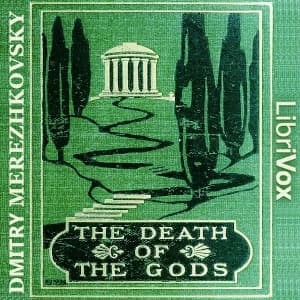
Dmitry Merezhkovsky was a prominent Russian writer, poet, and philosopher, known for his significant contributions to the Silver Age of Russian literature. Born into a noble family, he was educated in St. Petersburg and became deeply influenced by the philosophical currents of his time, particularly the ideas of Nietzsche and the Symbolist movement. Merezhkovsky's literary career began with poetry, but he soon turned to prose, producing notable works such as 'The Death of the Gods' and 'The Romance of the West and the East.' These works often explored themes of spirituality, the conflict between faith and reason, and the search for meaning in a rapidly changing world. Merezhkovsky's literary significance lies not only in his narrative style but also in his role as a cultural critic. He was a vocal advocate for the Symbolist movement and engaged in the philosophical debates of his time, often positioning himself against the materialism that he perceived in contemporary society. His works, which included historical novels and essays, sought to bridge the gap between the spiritual and the material, reflecting his belief in the transformative power of art. His legacy is marked by his influence on later Russian writers and thinkers, and he remains a key figure in understanding the complexities of Russian literature during a time of great social and political upheaval.
Famous Quotes
View all 4 quotes“A thought expressed is a falsehood." In poetry what is not said and yet gleams through the beauty of the symbol, works more powerfully on the heart than that which is expressed in words. Symbolism makes the very style, the very artistic substance of poetry inspired, transparent, illuminated throughout like the delicate walls of an alabaster amphora in which a flame is ignited.Characters can also serve as symbols. Sancho Panza and Faust, Don Quixote and Hamlet, Don Juan and Falstaff, according to the words of Goethe, are "schwankende Gestalten."Apparitions which haunt mankind, sometimes repeatedly from age to age, accompany mankind from generation to generation. It is impossible to communicate in any words whatsoever the idea of such symbolic characters, for words only define and restrict thought, but symbols express the unrestricted aspect of truth.Moreover we cannot be satisfied with a vulgar, photographic exactness of experimental photoqraphv. We demand and have premonition of, according to the allusions of Flaubert, Maupassant, Turgenev, Ibsen, new and as yet undisclosed worlds of impressionability. This thirst for the unexperienced, in pursuit of elusive nuances, of the dark and unconscious in our sensibility, is the characteristic feature of the coming ideal poetry. Earlier Baudelaire and Edgar Allan Poe said that the beautiful must somewhat amaze, must seem unexpected and extraordinary. French critics more or less successfully named this feature - impressionism.Such are the three major elements of the new art: a mystical content, symbols, and the expansion of artistic impressionability.No positivistic conclusions, no utilitarian computation, but only a creative faith in something infinite and immortal can ignite the soul of man, create heroes, martyrs and prophets... People have need of faith, they need inspiration, they crave a holy madness in their heroes and martyrs.("On The Reasons For The Decline And On The New Tendencies In Contemporary Literature")””
“Now the final dogmatic veil has been eternally torn away, the final mystical spirit is being extinguished. And here stand today's people, defenseless-face to face with the indescribable gloom, on the dividing line of light and darkness, and now no one can protect his heart any longer from the terrifying cold drifting up out of the abyss. Wherever we might go, wherever we might hide behind the barrier of scientific criticism, we feel with all our being the nearness of a mystery, the nearness of the ocean.There are no limits! We are free and lonely... No enslaved mysticism of a previous age can be compared with this terror. Never before have people felt in their hearts such a need to believe, and in their minds comprehended their inability to believe. In this diseased and irresolvable dissonance, in this tragic contradiction, as well as in the unheard-of intellectual freedom, in the courage of negation, is contained the most characteristic feature of the mystical need of the nineteenth century.Our time must define in two contrasting features this time of the most extreme materialism and at the same time of the most passionate idealistic outbursts of the spirit. We are witnessing a mighty and all-important struggle between two views of life, between two diametrically opposed worldviews. The final demands of religious feeling are experiencing a confrontation with the final conclusions of the experimental sciences.The intellectual struggle which filled the nineteenth century could not but be reflected in contemporary literature.("On The Reasons For The Decline And On The New Tendencies In Contemporary Literature")””
“In essence the entire generation at the end of the nineteenth century bears in its soul that same reaction against the suffocatingly dead positivism which lay on hearts like a stone. It is quite possible that they will perish, that they will not succeed in accomplishing anything. But others will come and will carry on, all the same, their work, because this work is vital...Symbols must naturally and effortlessly emerge out of the depth of reality. But if the author unnaturally invents them in order to express some idea or other, they will be transformed into dead allegories which arouse nothing other than repulsion like all that is dead.("On The Reasons For The Decline And On The New Tendencies In Contemporary Literature")””
Audiobooks from the author

Link to this page
Add a free, dofollow link to Lex on your blog, forum, syllabus, or reading list.

<a href="https://lex-books.com/author/dmitry-merezhkovsky"><img src="https://lex-books.com/badges/read-on-lex.svg" alt="Dmitry Merezhkovsky on Lex" width="160" height="40"></a>[](https://lex-books.com/author/dmitry-merezhkovsky)[url=https://lex-books.com/author/dmitry-merezhkovsky][img]https://lex-books.com/badges/read-on-lex.svg[/img][/url]Dmitry Merezhkovsky on Lex: https://lex-books.com/author/dmitry-merezhkovsky