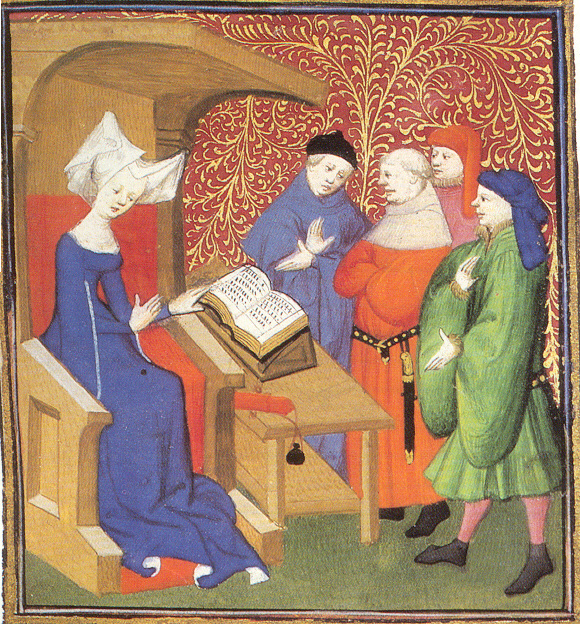
Christine de Pizan
Christine de Pizan was a pioneering figure in medieval literature, recognized as one of the first female professional writers in Europe. Born in Venice and later moving to France, she became a prominent voice in the early 15th century, advocating for women's rights and education through her writings. Her most notable work, 'The Book of the City of Ladies,' constructed an allegorical city populated by virtuous women, challenging the misogynistic narratives of her time and asserting the value of women's contributions to society. Christine's writings often blended poetry and prose, exploring themes of love, morality, and the role of women in a patriarchal society. In addition to her advocacy for women, Christine de Pizan's work 'Épître d'Othéa' stands out as a significant contribution to the literary canon. This text, addressed to Hector of Troy, is a collection of moral lessons and advice, showcasing her skill in weaving classical themes with contemporary issues. Christine's legacy endures as she paved the way for future generations of female writers, establishing a literary tradition that challenged societal norms and celebrated women's intellect and agency. Her influence can be seen in the works of later feminist writers and thinkers, making her a crucial figure in the history of literature.
Books from the author
Link to this page
Add a free, dofollow link to Lex on your blog, forum, syllabus, or reading list.

<a href="https://lex-books.com/author/christine-de-pizan-f0a55e"><img src="https://lex-books.com/badges/read-on-lex.svg" alt="Christine de Pizan on Lex" width="160" height="40"></a>[](https://lex-books.com/author/christine-de-pizan-f0a55e)[url=https://lex-books.com/author/christine-de-pizan-f0a55e][img]https://lex-books.com/badges/read-on-lex.svg[/img][/url]Christine de Pizan on Lex: https://lex-books.com/author/christine-de-pizan-f0a55e