
Charles-Louis de Secondat, baron de La Brède et de Montesquieu
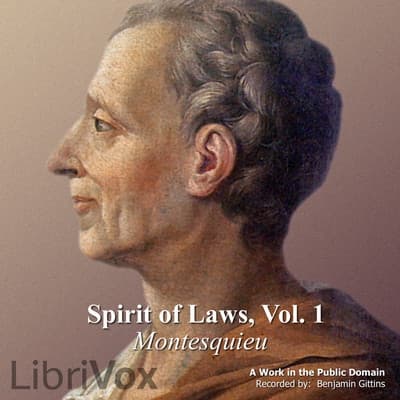
Charles-Louis de Secondat, baron de La Brède et de Montesquieu, was a French philosopher and writer whose ideas laid the groundwork for modern political science. Born into a noble family, Montesquieu was educated in law and became a prominent figure in the Enlightenment, advocating for the separation of powers within government. His seminal work, 'The Spirit of the Laws,' published in 1748, analyzed the relationship between laws and social structures, influencing the development of democratic governance and constitutional law. Montesquieu's insights into the importance of checks and balances in government were particularly impactful, shaping the frameworks of many modern democracies, including that of the United States. In addition to his political theories, Montesquieu was also known for his satirical novel 'Persian Letters,' which critiqued French society and politics through the lens of two Persian travelers. This work not only showcased his wit and literary prowess but also highlighted the cultural relativism that became a hallmark of Enlightenment thought. Montesquieu's legacy endures as a foundational figure in both philosophy and political theory, whose ideas continue to resonate in discussions about liberty, governance, and the rule of law.
Audiobooks from the author

Link to this page
Add a free, dofollow link to Lex on your blog, forum, syllabus, or reading list.

<a href="https://lex-books.com/author/charles-louis-de-secondat-baron-de-la-brde-et-de-montesquieu"><img src="https://lex-books.com/badges/read-on-lex.svg" alt="Charles-Louis de Secondat, baron de La Brède et de Montesquieu on Lex" width="160" height="40"></a>[](https://lex-books.com/author/charles-louis-de-secondat-baron-de-la-brde-et-de-montesquieu)[url=https://lex-books.com/author/charles-louis-de-secondat-baron-de-la-brde-et-de-montesquieu][img]https://lex-books.com/badges/read-on-lex.svg[/img][/url]Charles-Louis de Secondat, baron de La Brède et de Montesquieu on Lex: https://lex-books.com/author/charles-louis-de-secondat-baron-de-la-brde-et-de-montesquieu