Charles Hughes
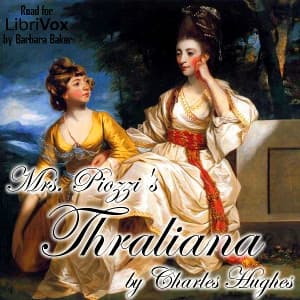
Charles Hughes was a notable figure in the 18th century, primarily recognized for his editorial work on the writings of Hester Thrale, particularly her diary, 'Mrs. Piozzi's Thraliana.' Hughes played a crucial role in preserving and presenting Thrale's reflections on her life, her relationship with Samuel Johnson, and the literary circles of her time. His efforts not only highlighted Thrale's significance as a woman in literature but also provided valuable insights into the social and cultural milieu of late 18th-century England. Hughes's editorial contributions helped to elevate the status of women's writing during an era when female voices were often marginalized. By bringing 'Thraliana' to a broader audience, he showcased Thrale's wit, intelligence, and keen observations, thereby enriching the literary landscape of the period. His work remains a testament to the importance of preserving diverse perspectives in historical narratives, ensuring that the contributions of women like Thrale are recognized and celebrated in literary history.
Famous Quotes
View all 11 quotes“When we lose the right to be different, we lose the privilege to be free.””
“A dissent in a court of last resort is an appeal to the brooding spirit of law, to the intelligence of a future day when a later decision may possibly correct the error into which the dissenting justice believes the court to have been betrayed.””
“A man has to live with himself, and he should see to it that he always has good company.””
Books from the author
Link to this page
Add a free, dofollow link to Lex on your blog, forum, syllabus, or reading list.

<a href="https://lex-books.com/author/charles-hughes"><img src="https://lex-books.com/badges/read-on-lex.svg" alt="Charles Hughes on Lex" width="160" height="40"></a>[](https://lex-books.com/author/charles-hughes)[url=https://lex-books.com/author/charles-hughes][img]https://lex-books.com/badges/read-on-lex.svg[/img][/url]Charles Hughes on Lex: https://lex-books.com/author/charles-hughes