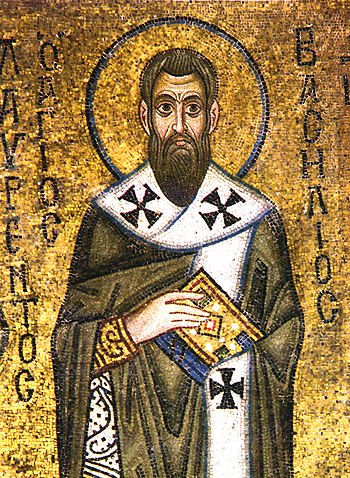
Basil of Caesarea
Basil of Caesarea, also known as Saint Basil the Great, was a pivotal figure in early Christian theology and monasticism. Born into a wealthy family in Cappadocia, he was educated in the classical traditions of rhetoric and philosophy, which he later integrated into his theological writings. Basil became a bishop of Caesarea and was instrumental in the development of Christian doctrine, particularly in his opposition to Arianism, a belief that denied the divinity of Christ. His works, including the 'Hexaemeron' and 'On the Holy Spirit', laid the groundwork for later Christian thought and established him as a key theologian of the Nicene faith. Basil's influence extended beyond theology; he is also credited with founding one of the first Christian monastic communities, promoting a communal lifestyle that emphasized prayer, work, and charity. His rule for monastic life, known as the 'Rule of Saint Basil', became foundational for Eastern monasticism and influenced the development of monastic practices in the West. His legacy as a saint and a Doctor of the Church endures, with his feast day celebrated in both Eastern and Western Christian traditions, highlighting his lasting impact on Christianity and monasticism.
Audiobooks from the author

Link to this page
Add a free, dofollow link to Lex on your blog, forum, syllabus, or reading list.

<a href="https://lex-books.com/author/basil-of-caesarea"><img src="https://lex-books.com/badges/read-on-lex.svg" alt="Basil of Caesarea on Lex" width="160" height="40"></a>[](https://lex-books.com/author/basil-of-caesarea)[url=https://lex-books.com/author/basil-of-caesarea][img]https://lex-books.com/badges/read-on-lex.svg[/img][/url]Basil of Caesarea on Lex: https://lex-books.com/author/basil-of-caesarea