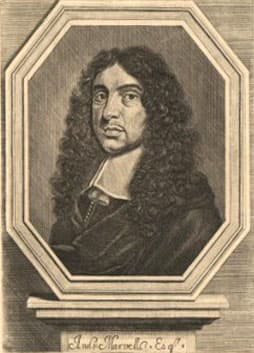
Andrew Marvell
Andrew Marvell was an influential English poet, satirist, and politician, known for his sharp wit and metaphysical style. Born in 1621, he became a prominent figure during the Commonwealth, where he formed a notable friendship with John Milton. Marvell's poetry spans a variety of themes, from the passionate love expressed in 'To His Coy Mistress' to the contemplative reflections on nature and society found in 'The Garden' and 'Upon Appleton House'. His work often blended personal sentiment with political commentary, as seen in pieces like 'An Horatian Ode upon Cromwell's Return from Ireland', which addressed the complexities of power and governance during a tumultuous period in English history. Marvell's literary significance lies in his innovative use of metaphysical conceits and his ability to intertwine personal and political themes. His satirical works, including 'Flecknoe' and 'The Character of Holland', showcased his keen observations and critiques of contemporary society. Through his poetry and prose, Marvell not only contributed to the literary landscape of the 17th century but also influenced future generations of writers with his unique voice and perspective. His legacy endures as a testament to the power of poetry in reflecting and shaping the cultural and political milieu of his time.
Famous Quotes
View all 3 quotes“Had we but World enough, and Time, This coyness Lady were no crime. We would sit down, and think which way To walk, and pass our long Loves Day.”
“To His Coy Mistress Had we but world enough and time, This coyness, lady, were no crime. We would sit down, and think which way To walk, and pass our long love’s day. Thou by the Indian Ganges’ side Shouldst rubies find; I by the tide Of Humber would complain. I would Love you ten years before the flood, And you should, if you please, refuse Till the conversion of the Jews. My vegetable love should grow Vaster than empires and more slow; An hundred years should go to praise Thine eyes, and on thy forehead gaze; Two hundred to adore each breast, But thirty thousand to the rest; An age at least to every part, And the last age should show your heart. For, lady, you deserve this state, Nor would I love at lower rate. But at my back I always hear Time’s wingèd chariot hurrying near; And yonder all before us lie Deserts of vast eternity. Thy beauty shall no more be found; Nor, in thy marble vault, shall sound My echoing song; then worms shall try That long-preserved virginity, And your quaint honour turn to dust, And into ashes all my lust; The grave’s a fine and private place, But none, I think, do there embrace. Now therefore, while the youthful hue Sits on thy skin like morning dew, And while thy willing soul transpires At every pore with instant fires, Now let us sport us while we may, And now, like amorous birds of prey, Rather at once our time devour Than languish in his slow-chapped power. Let us roll all our strength and all Our sweetness up into one ball, And tear our pleasures with rough strife Thorough the iron gates of life: Thus, though we cannot make our sun Stand still, yet we will make him run.”
“Thus, though we cannot make our sun Stand still, yet we will make him run.”
Books from the author
Link to this page
Add a free, dofollow link to Lex on your blog, forum, syllabus, or reading list.

<a href="https://lex-books.com/author/andrew-marvell"><img src="https://lex-books.com/badges/read-on-lex.svg" alt="Andrew Marvell on Lex" width="160" height="40"></a>[](https://lex-books.com/author/andrew-marvell)[url=https://lex-books.com/author/andrew-marvell][img]https://lex-books.com/badges/read-on-lex.svg[/img][/url]Andrew Marvell on Lex: https://lex-books.com/author/andrew-marvell