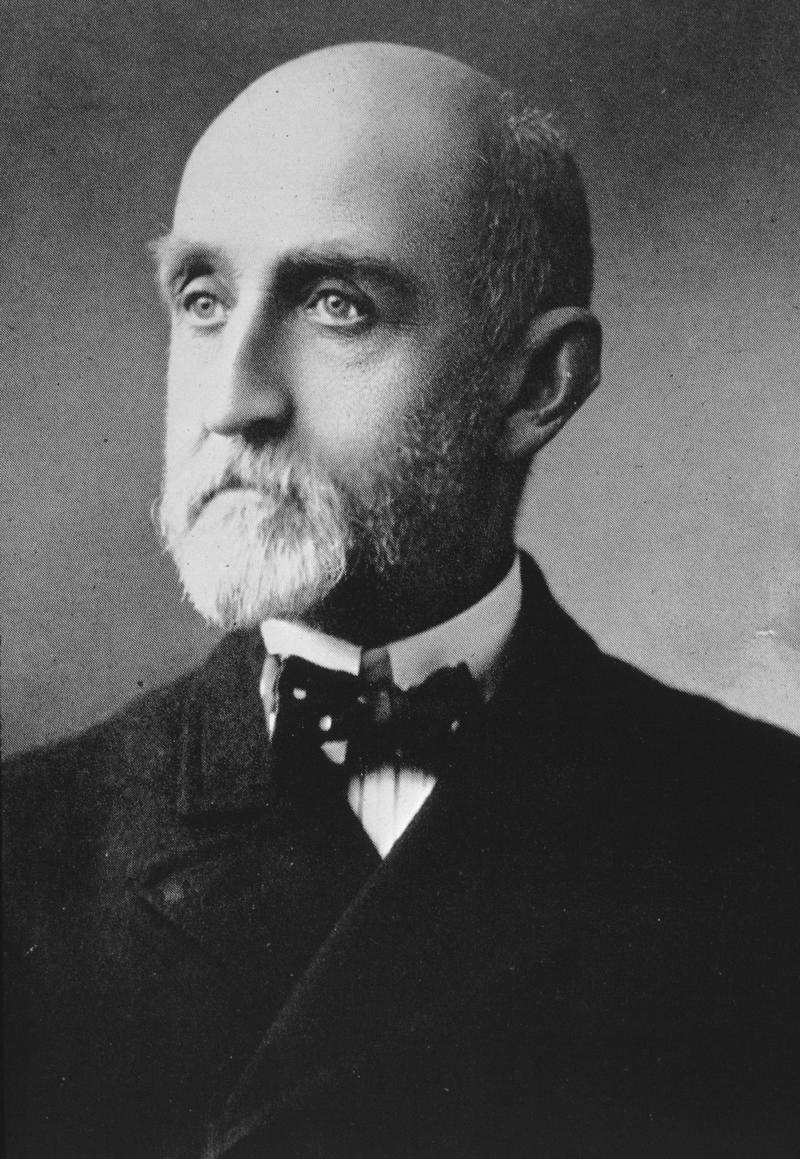
Alfred Thayer Mahan
Alfred Thayer Mahan was a prominent American naval officer and historian, best known for his influential theories on naval strategy and the importance of sea power in global politics. Born in 1840, Mahan's experiences in the United States Navy during the 19th century shaped his views on maritime dominance. His seminal work, 'The Influence of Sea Power upon History, 1660-1783,' published in 1890, argued that national greatness was inextricably linked to maritime strength, a concept that significantly impacted naval policies around the world and contributed to the naval arms race leading up to World War I. Mahan's ideas extended beyond mere military strategy; they influenced political leaders and military thinkers globally, including figures in Germany, Japan, and Britain. His advocacy for a strong navy and control of key maritime chokepoints helped to reshape the United States' naval policy and its role on the world stage. Mahan's legacy endures in modern naval strategy and international relations, as his theories continue to be studied and debated in military academies and political circles, highlighting the enduring significance of sea power in global affairs.
Famous Quotes
View all 17 quotes“Organized force alone enables the quiet and the weak to go about their business and to sleep securely in their beds, safe from the violent without or within.””
“The study of history lies at the foundation of all sound military conclusions and practice.””
“The surer of himself an admiral is, the finer the tactical development of his fleet, the better his captains, the more reluctant must he necessarily be to enter into a melee with equal forces, in which all these advantages will be thrown away, chance reign supreme, and his fleet be place on terms of equality with an assemblage of ships which have never before acted together.””
Books from the author


Link to this page
Add a free, dofollow link to Lex on your blog, forum, syllabus, or reading list.

<a href="https://lex-books.com/author/alfred-thayer-mahan"><img src="https://lex-books.com/badges/read-on-lex.svg" alt="Alfred Thayer Mahan on Lex" width="160" height="40"></a>[](https://lex-books.com/author/alfred-thayer-mahan)[url=https://lex-books.com/author/alfred-thayer-mahan][img]https://lex-books.com/badges/read-on-lex.svg[/img][/url]Alfred Thayer Mahan on Lex: https://lex-books.com/author/alfred-thayer-mahan