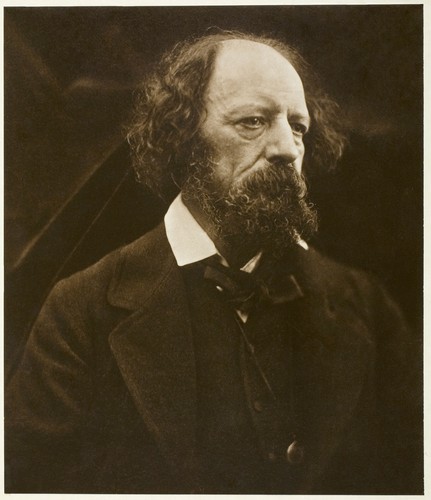
Alfred, Lord Tennyson
Alfred, Lord Tennyson was a prominent English poet and the Poet Laureate of the United Kingdom during much of Queen Victoria's reign. He first gained recognition in 1829 when he was awarded the Chancellor's Gold Medal at Cambridge for his poem "Timbuktu." His debut collection, "Poems, Chiefly Lyrical," published in 1830, featured celebrated works like "Claribel" and "Mariana." Tennyson's early poetry, characterized by its medieval themes and vivid imagery, captured the attention of notable contemporaries, including Samuel Taylor Coleridge, and played a significant role in shaping the Pre-Raphaelite movement. Throughout his career, Tennyson produced a remarkable body of work that included famous pieces such as "The Charge of the Light Brigade" and the epic poem "Idylls of the King," which reimagined the Arthurian legends. His exploration of themes such as love, loss, and the passage of time resonated deeply with Victorian audiences, solidifying his status as one of the era's leading poets. Tennyson's legacy endures, not only for his contributions to English literature but also for his ability to articulate the complexities of the human experience, making him a central figure in the canon of Victorian poetry.
Books from the author
Link to this page
Add a free, dofollow link to Lex on your blog, forum, syllabus, or reading list.

<a href="https://lex-books.com/author/alfred-lord-tennyson"><img src="https://lex-books.com/badges/read-on-lex.svg" alt="Alfred, Lord Tennyson on Lex" width="160" height="40"></a>[](https://lex-books.com/author/alfred-lord-tennyson)[url=https://lex-books.com/author/alfred-lord-tennyson][img]https://lex-books.com/badges/read-on-lex.svg[/img][/url]Alfred, Lord Tennyson on Lex: https://lex-books.com/author/alfred-lord-tennyson