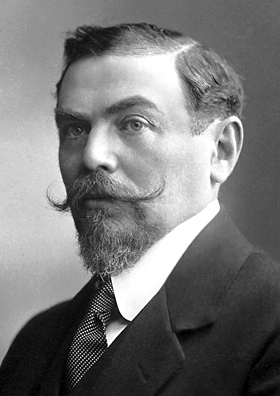
Alfred Hermann Fried
Alfred Hermann Fried was an influential Austrian pacifist, journalist, and author, known for his fervent advocacy for peace and disarmament during the tumultuous years leading up to World War I. His writings often reflected his deep commitment to pacifism, which he viewed as essential for the progress of humanity. Fried's notable works, including 'The German Emperor and the Peace of the World' and 'Kurze Aufklärungen über Wesen und Ziel des Pazifismus', articulated his vision for a world free from war and violence, emphasizing the importance of international cooperation and understanding. Fried's contributions to the peace movement were significant, as he not only wrote extensively on the subject but also engaged in activism, founding the 'Deutsche Friedensgesellschaft' (German Peace Society) in 1892. His efforts earned him recognition as a leading figure in the early 20th-century pacifist movement, and he was awarded the Nobel Peace Prize in 1911 for his work. Fried's legacy endures in the ongoing discourse on peace and conflict resolution, as his ideas continue to inspire contemporary movements advocating for non-violence and diplomacy in international relations.
Books from the author

Link to this page
Add a free, dofollow link to Lex on your blog, forum, syllabus, or reading list.

<a href="https://lex-books.com/author/alfred-hermann-fried"><img src="https://lex-books.com/badges/read-on-lex.svg" alt="Alfred Hermann Fried on Lex" width="160" height="40"></a>[](https://lex-books.com/author/alfred-hermann-fried)[url=https://lex-books.com/author/alfred-hermann-fried][img]https://lex-books.com/badges/read-on-lex.svg[/img][/url]Alfred Hermann Fried on Lex: https://lex-books.com/author/alfred-hermann-fried