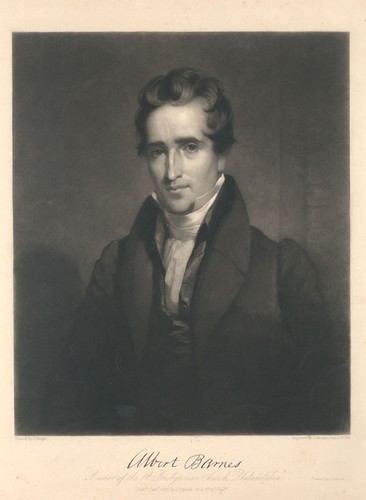
Albert Barnes
Albert Barnes was an influential American theologian and Presbyterian minister known for his extensive writings on biblical interpretation and social issues. Born in 1798, he became a prominent figure in the religious community, particularly noted for his critical essays and practical commentaries on the Scriptures. His works, such as 'Notes, Critical, Explanatory, and Practical on the Book of Psalms' and 'Notes, Explanatory & Practical, on the Gospels,' reflect his deep engagement with biblical texts, aiming to make them accessible and relevant to his contemporaries. Barnes's commentaries are characterized by their clarity and practical application, making them valuable resources for both clergy and lay readers alike. In addition to his biblical commentaries, Barnes was a vocal advocate against slavery, as evidenced by his work 'The Church and Slavery,' which argued for the moral imperative of abolition from a Christian perspective. His writings contributed to the discourse on social justice within the church, positioning him as a significant figure in the intersection of faith and social reform during a tumultuous period in American history. Barnes's legacy endures through his scholarly contributions and his commitment to applying Christian principles to societal issues, influencing both theological thought and social activism in the 19th century.
Famous Quotes
View all 3 quotes“But man, even while he disobeys God, does not like to part with Him altogether, but would serve Him enough to soothe his own conscience, or as far as he can without parting with his sin which he loves better. On HOSEA 2:11”
“Nothing suggests more strikingly a state of helplessness and dependence than the condition of orphan children and widows; nothing, therefore, conveys a more affecting description of the character of God - of his condescension and kindness - than to say that he will take the place of the parent in the one case, and be a protector in the other.”
“This is one of the most tender appellations that could be given to God, and conveys one of the most striking descriptions that can be given of his character. We see his greatness, his majesty, his power, in the worlds that he has made - in the storm, the tempest, the rolling ocean; but it is in such expressions as this that we learn, what we most desire to know, and what we cannot elsewhere learn, that he is a Father; that he is to be loved as well as feared.”
Books from the author

Link to this page
Add a free, dofollow link to Lex on your blog, forum, syllabus, or reading list.

<a href="https://lex-books.com/author/albert-barnes"><img src="https://lex-books.com/badges/read-on-lex.svg" alt="Albert Barnes on Lex" width="160" height="40"></a>[](https://lex-books.com/author/albert-barnes)[url=https://lex-books.com/author/albert-barnes][img]https://lex-books.com/badges/read-on-lex.svg[/img][/url]Albert Barnes on Lex: https://lex-books.com/author/albert-barnes