
Agnes Arber
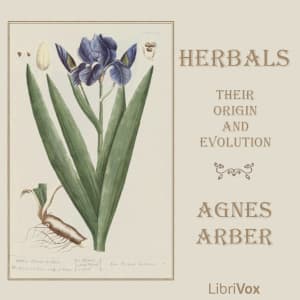
Agnes Arber was a pioneering British botanist and plant morphologist, renowned for her significant contributions to the field of botany in the early 20th century. Born into a family that valued education, she pursued her studies at Newnham College, Cambridge, where she became one of the first women to earn a degree in botany. Her academic career was marked by a deep interest in the history of plant science, which she explored through her writings and research. Arber's most notable work, "Herbals, Their Origin and Evolution: A Chapter in the History of Botany," examines the development of herbal texts and their impact on botanical science, highlighting the intersection of art and science in the study of plants. This work not only showcases her scholarly rigor but also emphasizes the historical significance of herbal literature in shaping botanical knowledge. Throughout her career, Arber advocated for the inclusion of women in scientific fields and contributed to the broader understanding of plant morphology and taxonomy. Her legacy is reflected in her role as a mentor to future generations of botanists and her efforts to bridge the gap between scientific inquiry and historical context. Agnes Arber's work remains influential in the study of botany, and her insights continue to resonate in contemporary botanical research, making her a key figure in the history of plant science.
Books from the author
Link to this page
Add a free, dofollow link to Lex on your blog, forum, syllabus, or reading list.

<a href="https://lex-books.com/author/agnes-arber"><img src="https://lex-books.com/badges/read-on-lex.svg" alt="Agnes Arber on Lex" width="160" height="40"></a>[](https://lex-books.com/author/agnes-arber)[url=https://lex-books.com/author/agnes-arber][img]https://lex-books.com/badges/read-on-lex.svg[/img][/url]Agnes Arber on Lex: https://lex-books.com/author/agnes-arber