abbé Brasseur de Bourbourg
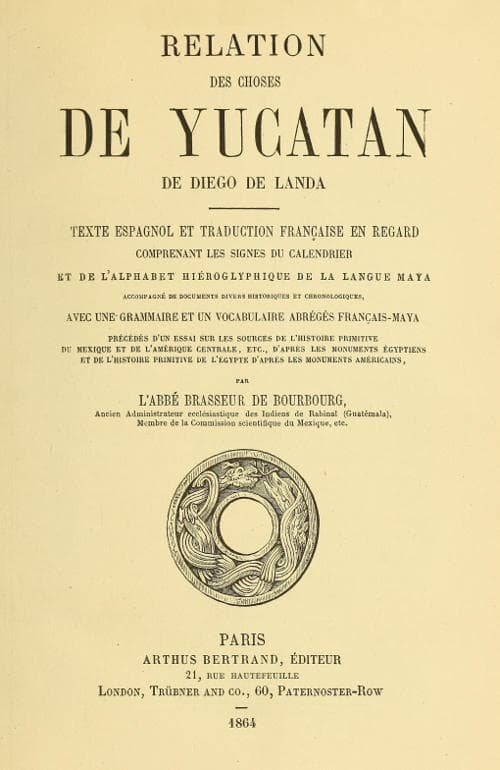
Abbé Brasseur de Bourbourg was a French priest, ethnologist, and archaeologist known for his pioneering studies of the indigenous cultures of Central America, particularly the Maya civilization. Born in the early 19th century, he dedicated much of his life to exploring the ancient ruins and manuscripts of the region, becoming one of the first Europeans to recognize the significance of Mayan hieroglyphics. His work was instrumental in bringing attention to the rich history and culture of the Maya, which had largely been overlooked by Western scholars at the time. Brasseur de Bourbourg's most notable works include "Histoire des nations civilisées du Mexique et de l'Amérique Centrale" and "La Découverte du Mexique," where he combined historical narrative with his findings from archaeological expeditions. His efforts to translate and interpret ancient texts laid the groundwork for future research in Mesoamerican studies. Despite facing skepticism from contemporaries, his contributions significantly advanced the understanding of pre-Columbian civilizations and inspired subsequent generations of scholars and explorers. His legacy endures in the field of anthropology and archaeology, where he is remembered as a key figure in the early study of indigenous American cultures.
Books from the author




Link to this page
Add a free, dofollow link to Lex on your blog, forum, syllabus, or reading list.

<a href="https://lex-books.com/author/abbé-brasseur-de-bourbourg"><img src="https://lex-books.com/badges/read-on-lex.svg" alt="abbé Brasseur de Bourbourg on Lex" width="160" height="40"></a>[](https://lex-books.com/author/abbé-brasseur-de-bourbourg)[url=https://lex-books.com/author/abbé-brasseur-de-bourbourg][img]https://lex-books.com/badges/read-on-lex.svg[/img][/url]abbé Brasseur de Bourbourg on Lex: https://lex-books.com/author/abbé-brasseur-de-bourbourg