What would you like to read?Search books, authors, genres, shelves, users...
Search books, authors, genres, shelves, users...Search books, authors, genres, shelves, users...

What would you like to read?Search books, authors, genres, shelves, users...
Search books, authors, genres, shelves, users...Search books, authors, genres, shelves, users...
1960
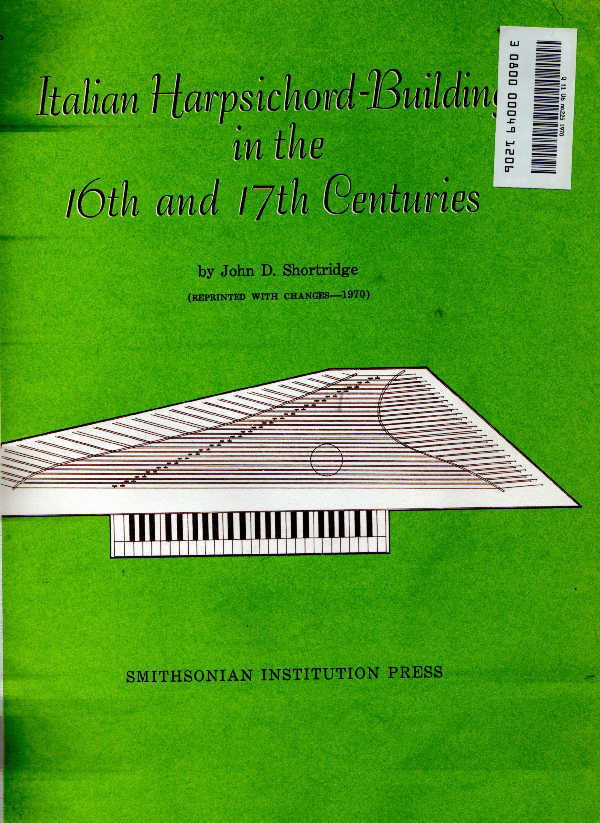
A scholarly publication written in the late 20th century, specifically reprinted in 1970. This paper delves into the historical and structural aspects of Italian harpsichords and virginals, highlighting their design and construction as well as their significance in musical history. Focused primarily on the 16th and 17th centuries, it aims to shed light on the craftsmanship and characteristics that distinguish Italian instruments from their northern European counterparts. The book offers detailed descriptions and illustrations of Italian harpsichords, specifically discussing typical examples from the Hugo Worch Collection at the U.S. National Museum. Shortridge emphasizes the simplicity in construction of these instruments compared to more elaborate designs elsewhere, while also addressing variations in keyboard ranges and string lengths. By analyzing the craft methods and acoustic features, the author presents a clear comparison of the structural components such as soundboards, jacks, and tuning mechanisms. Throughout the text, these historical instruments are not merely presented as artifacts; rather, Shortridge argues their aesthetic significance and the enduring beauty of their sound, providing insights into the broader context of musical instrument evolution during this period.