What would you like to read?Search books, authors, genres, shelves, users...
Search books, authors, genres, shelves, users...Search books, authors, genres, shelves, users...

What would you like to read?Search books, authors, genres, shelves, users...
Search books, authors, genres, shelves, users...Search books, authors, genres, shelves, users...
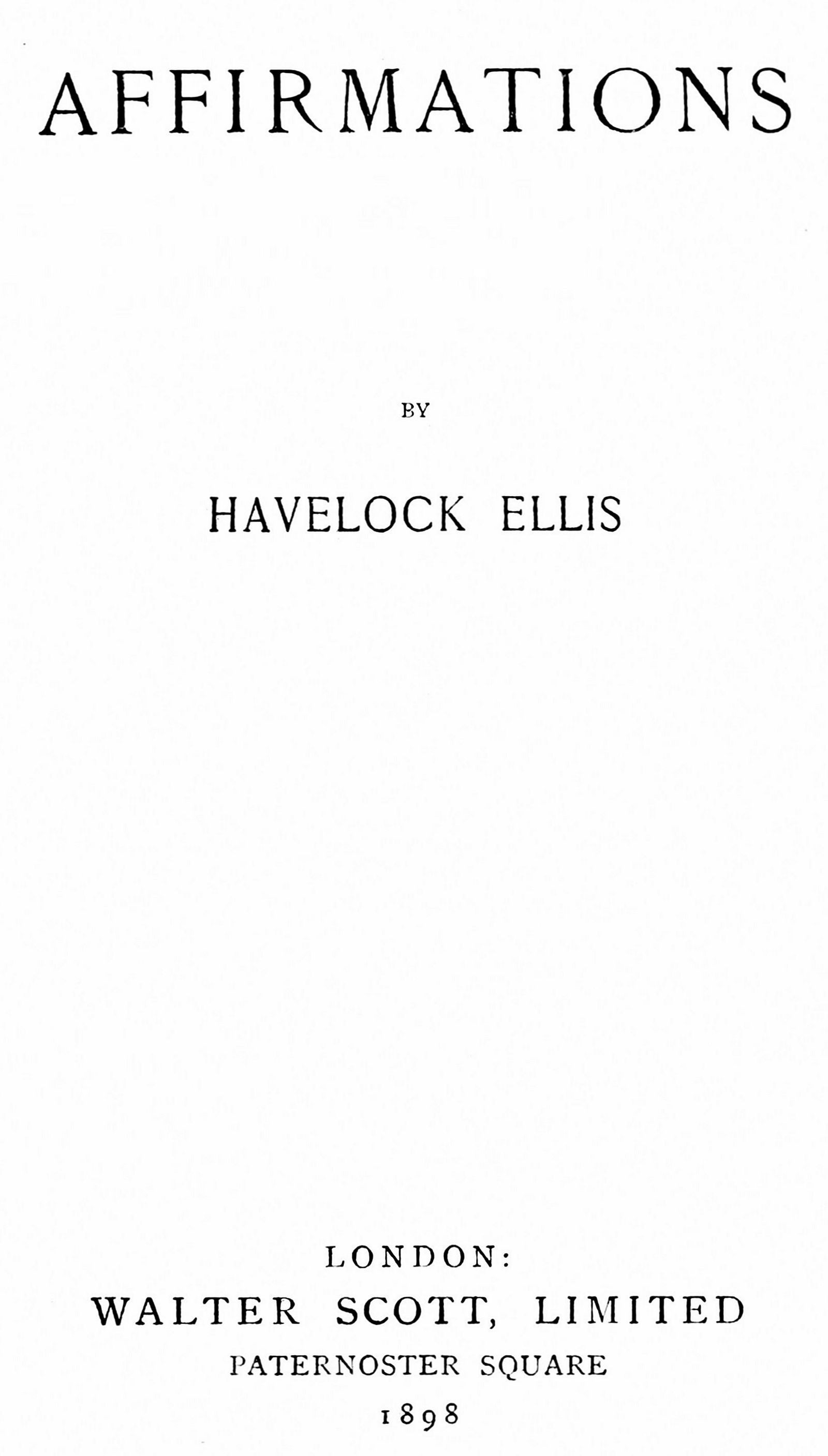
1898
A collection of literary-critical essays written in the late 19th century. It uses writers and saints as occasions for probing the “literature of life,” testing moral ideas and cultural assumptions rather than judging art for art’s sake. The pieces engage the most questionable aspects of conduct and belief to state a few enduring “affirmations,” while pressing readers to form their own. The opening of the work presents a preface and a long study of Nietzsche. Ellis contrasts a pure art-literature that raises no ethical questions with a literature close to life where morality must be examined, and he announces his intent to offer personal affirmations against the era’s self-congratulation. He then traces Nietzsche’s career—ancestry and austere youth, Pforta training, early devotion to Schopenhauer and Wagner, rise as a philologist, The Birth of Tragedy, the Bayreuth crisis and break with Wagner amid worsening health, the freethinking aphoristic middle period, the later “immoralist” doctrines, and the final mental collapse. Along the way he distils Nietzsche’s key ideas: Dionysian affirmation, the attack on Christianity and pity, conscience as tradition, the call to hardness and self-mastery, and the contrast between “slave” and “master” moralities, set against sharp national judgments and admiration for French clarity. He closes this opening section by valuing the middle Nietzsche most, proposing the dancer as his guiding image, and treating philosophy as personal psychology rather than a universal system.