
Andrey Bely
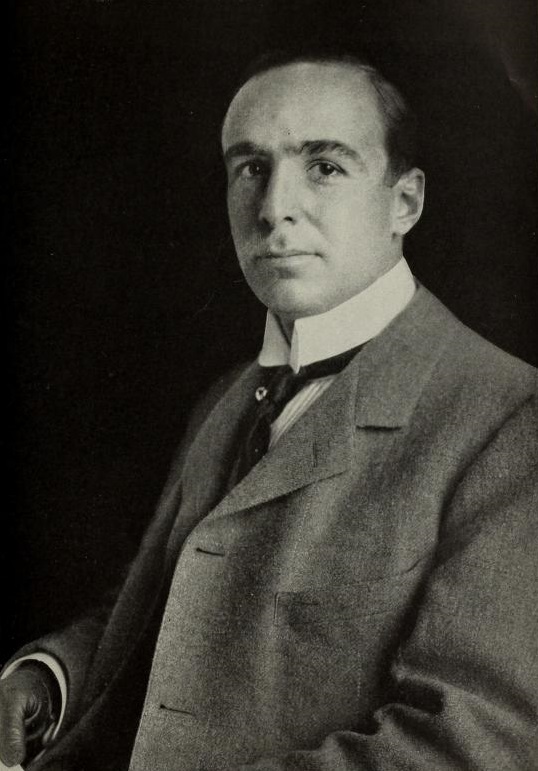
Andrey Bely, born Boris Nikolaevich Bugaev, was a prominent Russian novelist, Symbolist poet, and literary critic whose work significantly influenced modernist literature. He was deeply engaged with anthroposophy, following the teachings of Rudolf Steiner, which shaped his artistic vision and philosophical outlook. Bely's most notable work, the novel 'Petersburg,' published in 1913 and revised in 1922, is celebrated for its innovative narrative style and complex exploration of the Russian psyche, earning it a place among the masterpieces of modernist literature, as noted by Vladimir Nabokov. Bely's poetry also gained recognition, with many of his verses being adapted into songs by various Russian artists. Throughout his career, Bely contributed to the literary landscape of Russia, not only through his own writings but also as a critic and theorist. His legacy is honored through the Andrei Bely Prize, established to recognize outstanding achievements in Russian literature. Bely's exploration of themes such as identity, spirituality, and the urban experience continues to resonate, marking him as a pivotal figure in the evolution of Russian literary modernism and the Symbolist movement.
Famous Quotes
View all 3 quotes“People as such do not exist: they are all 'things conceived”
“In the lacquered house the storms of life took their course quietly; nevertheless the storms of life here took their course calamitously: they did not thunder with events; they did not shine a cleansing light into the inhabitants’ hearts with arrows of lightning; but from a hoarse throat they wrung the air in a torrent of poisonous fluids; and in the consciousness of the inhabitants cerebral games swirled round, like dense gases in hermetically sealed jars.”
“If you fall for a dark-eyed beauty, pretty as a picture, with lips as sweet as a luscious rasberry, and a gentle face, unrumpled by kisses, like an apple-blossom petal in May, and she becomes your love—then do not say that love is yours: even though you cannot tire of her rounded breasts, of her slender frame that melts in your embrace like wax before a flame. . . . The day will come, that cruel hour will come, the fatal moment will come, when he face will fade, rumpled by kisses, her breasts will no longer quiver at your touch: all this will come to pass; and you will be alone with your own shadow amidst the sunscorched deserts and the dried up springs, where flowers do not bloom and the sunlight plays on the dry skin of a lizard; and you might even see the hairy black tarantula’s lair, all enmeshed in the threads of its web . . . And then your thirsting voice will be raised from the sands, calling longingly to your homeland. --- But if your love is otherwise, if her browless face has once been touched by the black blemish of the pox, if her hair is red, her breasts sagging, her bare feet dirty, and to any extent at all her stomach protrudes, and still she is your love—then that which you have sought and found in her is the sacred homeland of your soul.”
Books from the author

Link to this page
Add a free, dofollow link to Lex on your blog, forum, syllabus, or reading list.

<a href="https://lex-books.com/author/andrey-bely"><img src="https://lex-books.com/badges/read-on-lex.svg" alt="Andrey Bely on Lex" width="160" height="40"></a>[](https://lex-books.com/author/andrey-bely)[url=https://lex-books.com/author/andrey-bely][img]https://lex-books.com/badges/read-on-lex.svg[/img][/url]Andrey Bely on Lex: https://lex-books.com/author/andrey-bely